
Last updated September 25, 2026
Non-destructive entry first, always - and we re-key Schlage, Kwikset, and Baldwin locks on the spot while you watch
You get a price before we start. It does not change when we arrive. No surprises.
How to Hire a Locksmith Contractor in Fort Worth: A Step-by-Step Guide
A Fort Worth resident who calls the first Google result for “locksmith near me” has a statistically meaningful chance of reaching a lead-generation site that will sell that call to an unlicensed technician. The Texas Department of Public Safety has issued cease-and-desist orders to this type of operation repeatedly since 2018, yet the calls keep coming because most homeowners do not know the three checkpoints that separate a legitimate Fort Worth locksmith from a bait-and-switch dispatch. This guide turns those checkpoints into a repeatable hiring sequence. You’ll learn how to verify a Texas locksmith license in under two minutes, how to demand a price that cannot change at your door, and how to confirm that the business you’re calling actually operates from a Fort Worth address, not a call center in another state.
Quick Answer
Hiring a locksmith contractor in Fort Worth takes three steps: verify the Texas DPS locksmith license number on the state portal, request a firm written price before scheduling that is contractually locked against change at arrival, and confirm a physical Fort Worth business address for dispute resolution. Skip any one of these checkpoints and you risk an unlicensed technician, a final bill that triples the phone quote, or a company that vanishes after the job.
Table of Contents
- Why Fort Worth Has a Locksmith Fraud Problem
- Step 1: Verify the Texas DPS Locksmith License
- Step 2: Demand a Firm Written Price Before Scheduling
- Step 3: Confirm a Real Fort Worth Address
- Red-Flag Language to Listen For
- What a Proper Texas Locksmith Invoice Must Contain
- Common Mistakes to Avoid
- When to Call a Professional
- Frequently Asked Questions
- The Bottom Line
Why Fort Worth Has a Locksmith Fraud Problem
Fort Worth’s growth pattern creates ideal conditions for locksmith fraud. The city added roughly 150,000 residents between 2015 and 2023, many in new developments on the northern and western edges where homeowners are unfamiliar with local service providers. New construction in Walsh, Pecan Square, and similar communities means thousands of families receiving their first set of keys and needing rekeys, lock upgrades, or emergency services without established relationships. The residential locksmith market in Fort Worth is fragmented, and that fragmentation is exploited.
The Texas DPS Private Security Bureau regulates locksmiths under Occupations Code Chapter 1702, but enforcement is complaint-driven. A lead-generation operation can place hundreds of ads, sell calls to unlicensed subcontractors, and operate for months before accumulating enough complaints to trigger investigation. In our experience serving Fort Worth since 2002, the customers who call us after a bad experience share remarkably similar stories: a low phone quote, a technician who arrives in an unmarked vehicle, and a final bill that bears no resemblance to the original price.
The geographic spread of Fort Worth compounds the problem. A customer in Benbrook who calls a “local” number may reach a dispatch center in Dallas or Houston. The technician who arrives might be driving from Arlington or Grand Prairie, carrying no company identification, working on commission rather than hourly wage, and incentivized to upsell unnecessary hardware. The customer has no recourse because the business they thought they called was merely a lead aggregator with no physical presence in Texas.
Three checkpoints stop this sequence. They take two minutes to execute. The sections that follow detail each one.
Step 1: Verify the Texas DPS Locksmith License
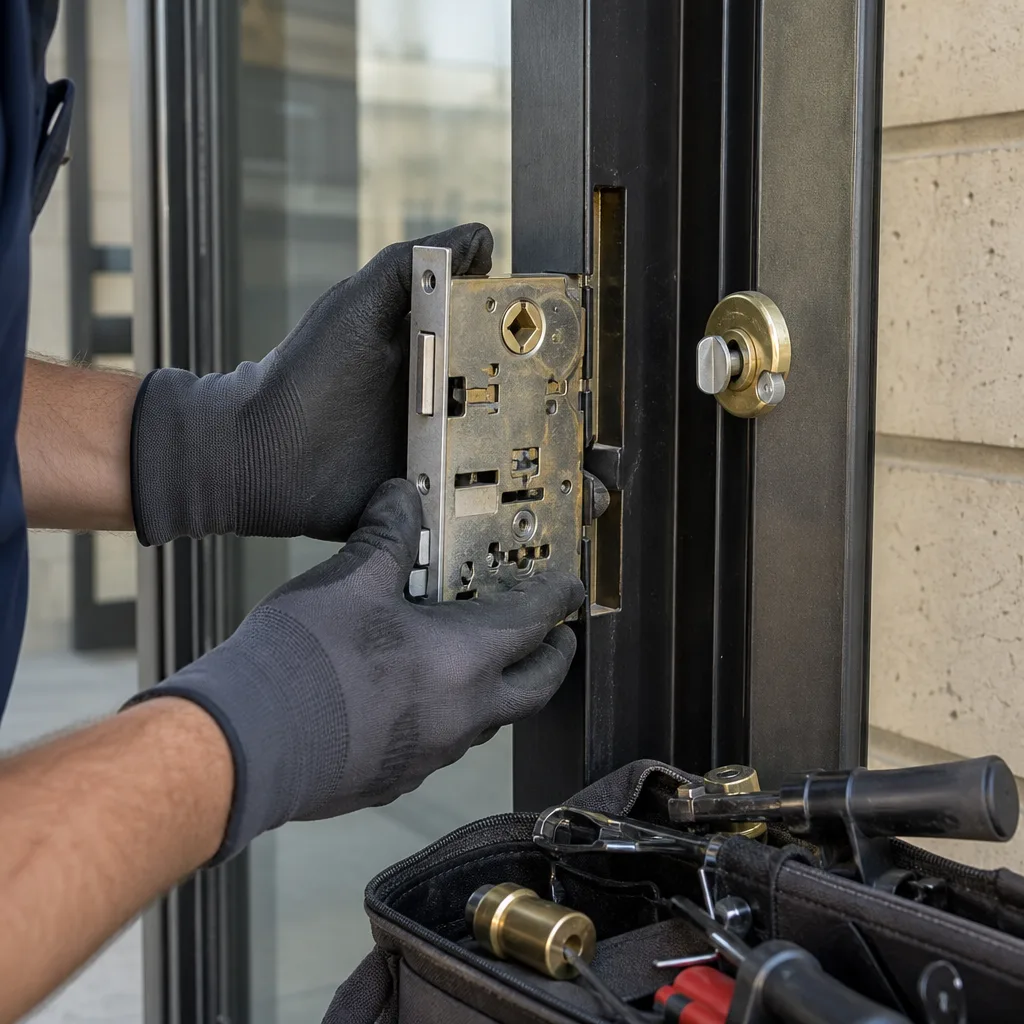
Every legitimate locksmith company in Texas must hold a license from the Department of Public Safety Private Security Bureau. Individual technicians must hold registration cards. This is not optional, not a “nice to have,” and not superseded by any city or county permit. State law requires it.
Here’s how to verify it:
- Navigate to the Texas DPS PSB License Search portal at txapps.texas.gov/PSB_Search/
- Select “Company License Search” from the dropdown menu
- Enter the business name exactly as advertised. If the company operates under a DBA, search both the DBA and the legal entity name
- Verify the license status shows “Active” and the license type includes “Locksmith”
- Note the license number and expiration date
If the business cannot provide a license number, or if the search returns no results, stop. Do not schedule service. An unlicensed locksmith in Texas is committing a Class A misdemeanor for a first offense and a state jail felony for subsequent violations. You are not being difficult by asking for this number. You are performing basic due diligence that the Texas Legislature has made both possible and necessary.
Ask the dispatcher: “What is your Texas DPS locksmith license number?” Write it down. Verify it before providing your address. A legitimate Fort Worth locksmith will provide this number without hesitation. At Novak Lock & Security Fort Worth, we state our license number when asked and encourage every caller to verify it. A business that deflects, claims the number is “internal,” or suggests you can check after the technician arrives is signaling that it may not exist.
The license verification also reveals the registered business address, which feeds directly into Step 3. If the address on file is a P.O. box in another city, that is information you need before scheduling.
Step 2: Demand a Firm Written Price Before Scheduling
This is the checkpoint that eliminates bait-and-switch pricing. The technique is straightforward: describe your need precisely, request an itemized price, and ask one specific follow-up question.
Here’s the sequence:
- Describe the job with specificity. “I need three Kwikset deadbolts rekeyed to a single key.” Not “I need my locks changed.” Precision matters because vague descriptions invite vague quotes.
- Request an itemized price. “What is the total price for labor, parts, and any service call?”
- Ask the lock question: “Is this price contractually locked, or can the technician change it on arrival?”
The answer to question three separates legitimate operators from bait-and-switch schemes. Acceptable answers sound like: “That is the final price. The technician cannot change it.” Unacceptable answers include: “It’s an estimate,” “It starts at,” “It depends what we find,” or “There’s a service call fee plus labor.”
At Novak Lock & Security Fort Worth, Haven Standard Clause 1 governs every transaction: the price quoted on the phone is the price on the invoice. The technician is contractually prohibited from changing it. This rule has been in place since 2002. When a Fort Worth customer calls (817) 765-4998, the dispatcher quotes a firm price for the described scope. That price is entered into the work order. The technician arrives with that work order and cannot alter the amount without management authorization, which is not granted for standard residential or commercial locksmith services in Fort Worth.
Request written confirmation. A legitimate locksmith will email or text the quote before dispatch. This document should specify:
- Labor rate or flat fee per service item
- Part numbers and prices if hardware is included
- Service call or trip charge, if any
- Total price, inclusive of tax
- A statement that the price is final and binding
If the dispatcher refuses to provide written confirmation, or if the confirmation lacks specificity, do not schedule. The “written price before any work starts” rule is not a marketing claim. It is the single most effective protection against the pricing fraud that dominates consumer complaints in this trade.
Step 3: Confirm a Real Fort Worth Address
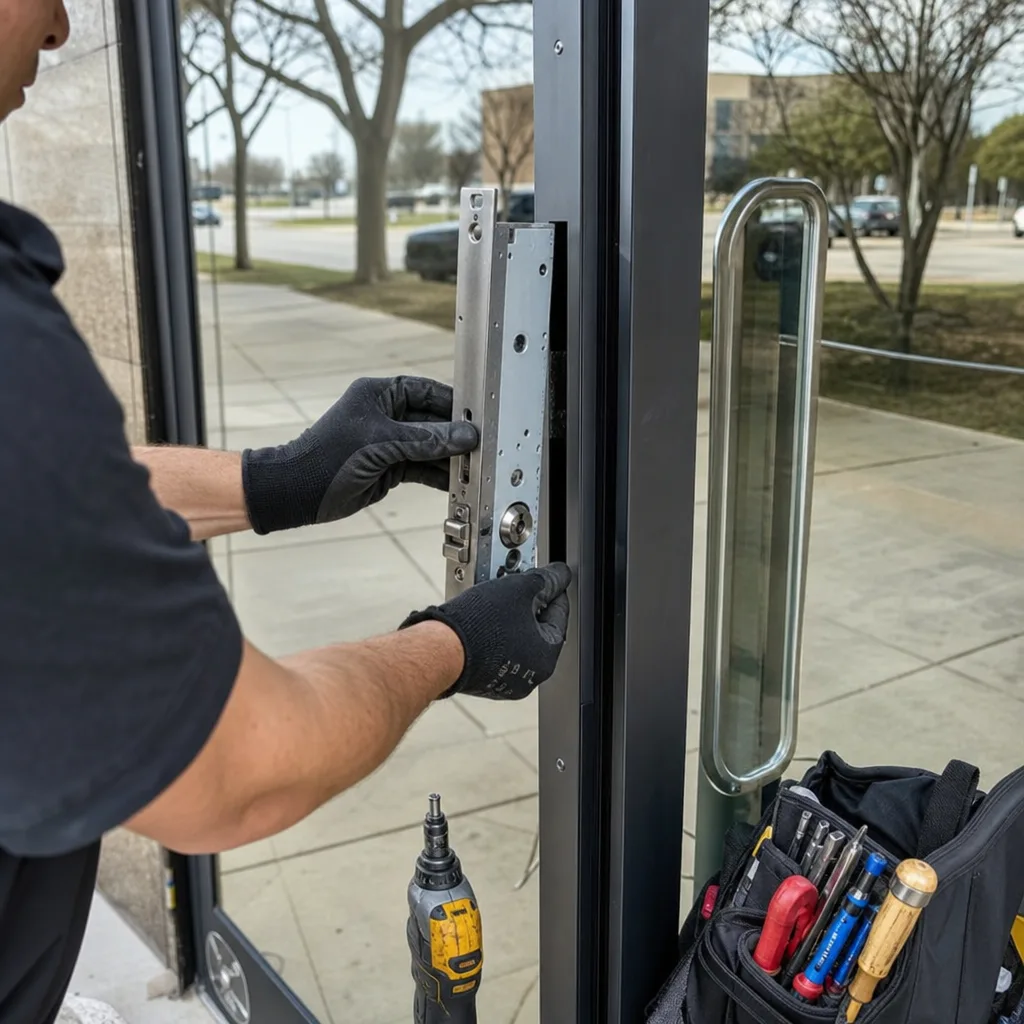
A physical business address in Fort Worth serves three functions: it confirms local operation, it provides a location for dispute resolution, and it indicates that the business has sufficient investment in the community to maintain a real facility rather than a virtual phone number.
Here’s how to verify:
- Ask the dispatcher: “What is your physical business address in Fort Worth?”
- Verify the address on Google Maps. Look for a building with signage, not a residential house or mailbox cluster
- Cross-reference the address with the Texas DPS license search from Step 1
- Search the address on the Tarrant County Appraisal District website to confirm commercial zoning
A P.O. box, a UPS store mailbox, or an address in Dallas, Arlington, or Houston should concern you. These arrangements are common among lead-generation operations that sell calls to the lowest bidder. The “local” number you called may forward to a call center. The technician who arrives may have no relationship to the company that answered the phone.
Fort Worth’s size and layout make this verification particularly important. A business claiming to serve Fort Worth from an address in Dallas may not have technicians familiar with local conditions: the expanded clay soil that shifts door frames in the western neighborhoods, the specific hardware grades common in 2015-2023 construction, or the access control requirements for Fort Worth commercial properties near the medical district or downtown core.
A real Fort Worth address also means real accountability. If a job goes wrong, you can visit the office. You can file a complaint with the Texas DPS that references a locatable business. You can pursue small claims court in Tarrant County rather than attempting to serve papers on a virtual entity in another jurisdiction.
Red-Flag Language to Listen For
During your initial call, certain phrases predict problematic outcomes with high reliability. We have documented these patterns across thousands of Fort Worth service calls since 2002.
| Phrase | What It Signals | What to Do |
|---|---|---|
| “It’s just an estimate” | The final price will likely exceed the quote, sometimes by 300-500% | Request a firm, binding price or end the call |
| “Starting at…” | The quoted figure is a floor, not an expected price; most jobs cost more | Ask for the typical total for your specific job |
| “Depends on what we find” | The dispatcher cannot or will not commit to a scope; opens door to upselling | Describe your situation precisely; if still vague, call elsewhere |
| “Service call fee separate” | The quoted labor excludes the trip charge; total will be higher | Demand all-inclusive pricing before scheduling |
| “The technician will explain pricing” | Price authority is delegated to the field, enabling on-site changes | Insist on a locked price from the dispatcher |
| “We work with all brands” | Often means no factory authorization; may install incompatible hardware | Ask specifically about the brand you own or want |
| “I need your address first” | May be collecting location data before revealing pricing or licensing | Provide zip code only; demand license and price before full address |
None of these phrases automatically proves fraud. Each one, however, correlates with consumer complaints in Texas DPS enforcement actions and Better Business Bureau filings. A legitimate Fort Worth locksmith can answer your questions directly without deflection or pressure.
What a Proper Texas Locksmith Invoice Must Contain
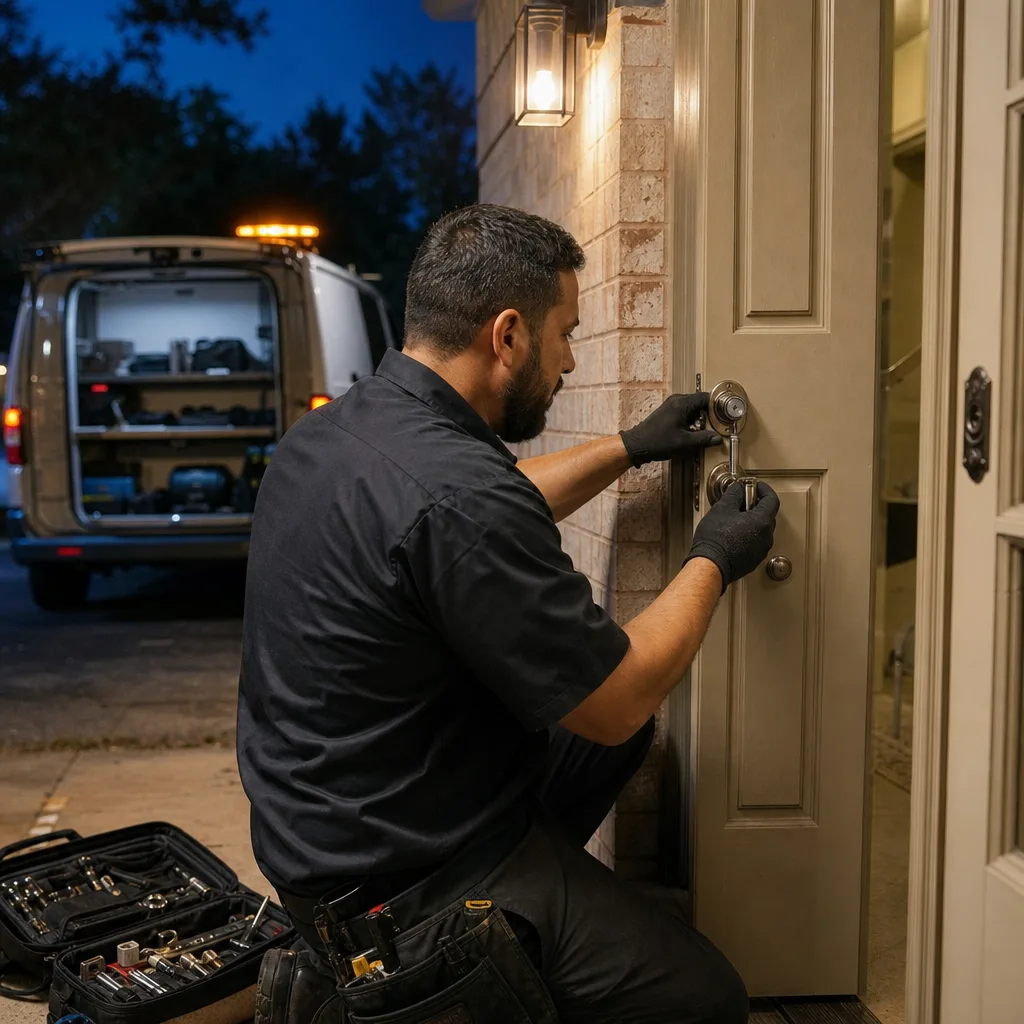
Texas Occupations Code Chapter 1702, Section 1702.387, specifies minimum invoice contents for locksmith services. A proper invoice protects both parties and creates a record for warranty claims or disputes.
Require these elements:
- Company name and Texas DPS license number
- Technician name and individual registration number
- Date, time, and service address
- Description of work performed, including lock brands and model numbers
- Itemized labor, parts, and trip charges
- Total amount charged
- Company physical address and phone number
At Novak Lock & Security Fort Worth, every invoice includes these elements plus the documented photo record taken during service. The photo record shows the condition of existing hardware, the installed or serviced components, and the completed work. This is standard procedure under The Haven Standard, not an upgrade or add-on.
Fort Worth customers in older neighborhoods like Fairmount, Ryan Place, or the Near Southside should pay particular attention to hardware documentation. Historic homes often contain non-standard lock preparations, mixed hardware generations, or modifications by previous owners. A detailed invoice with part numbers ensures that future service, whether by our technicians or another provider, references the actual components installed rather than guesswork.
For commercial locksmith work in Fort Worth, the invoice should also specify key control levels, master key system hierarchy if applicable, and warranty terms in writing. High-security cylinders from Medeco, Mul-T-Lock, or Abloy carry factory warranties that require installation documentation for validation. A vague invoice voids these protections.
Common Mistakes to Avoid
- Skipping license verification because “they sounded professional.” The most sophisticated bait-and-switch operations invest heavily in phone training. Professional demeanor correlates weakly with legitimate licensing. Verify every time.
- Accepting “I’ll text you the quote when I’m on my way.” A quote received after dispatch is not a quote. It is an arrival notification with numbers attached. The time to negotiate price is before you provide your address and before the technician invests travel time.
- Assuming Google Maps location equals physical address. Lead generators optimize for map placement using virtual offices and mailboxes. A pin on Google Maps proves only that someone claimed a location, not that a locksmith business operates there.
- Paying cash for “a discount.” Cash discounts in this trade often accompany off-books pricing, no invoice, and no recourse. A legitimate Fort Worth locksmith accepts standard payment methods and provides a receipt. Our documented photo record and written invoice are generated automatically; cash or card makes no difference to documentation.
- Hiring based on lowest price alone in emergency situations. A Fort Worth resident locked out at 10 PM is vulnerable to exploitation. The urgency is real, but the vetting process remains the same: license, locked price, local address. A two-minute delay for verification beats a $400 surprise charge.
- Neglecting to ask about warranty terms before work starts. The 365-Day Done Right Promise at Novak Lock & Security Fort Worth covers installation and workmanship defects for a full year. Some competitors offer 30 days, some offer none. Warranty length reveals business confidence and investment in quality.
- Failing to document the technician’s arrival. Note the vehicle, the uniform, the identification presented. A background-checked, uniformed technician in a marked van is standard for legitimate operations. An unmarked vehicle and casual dress are warning signs.
When to Call a Professional
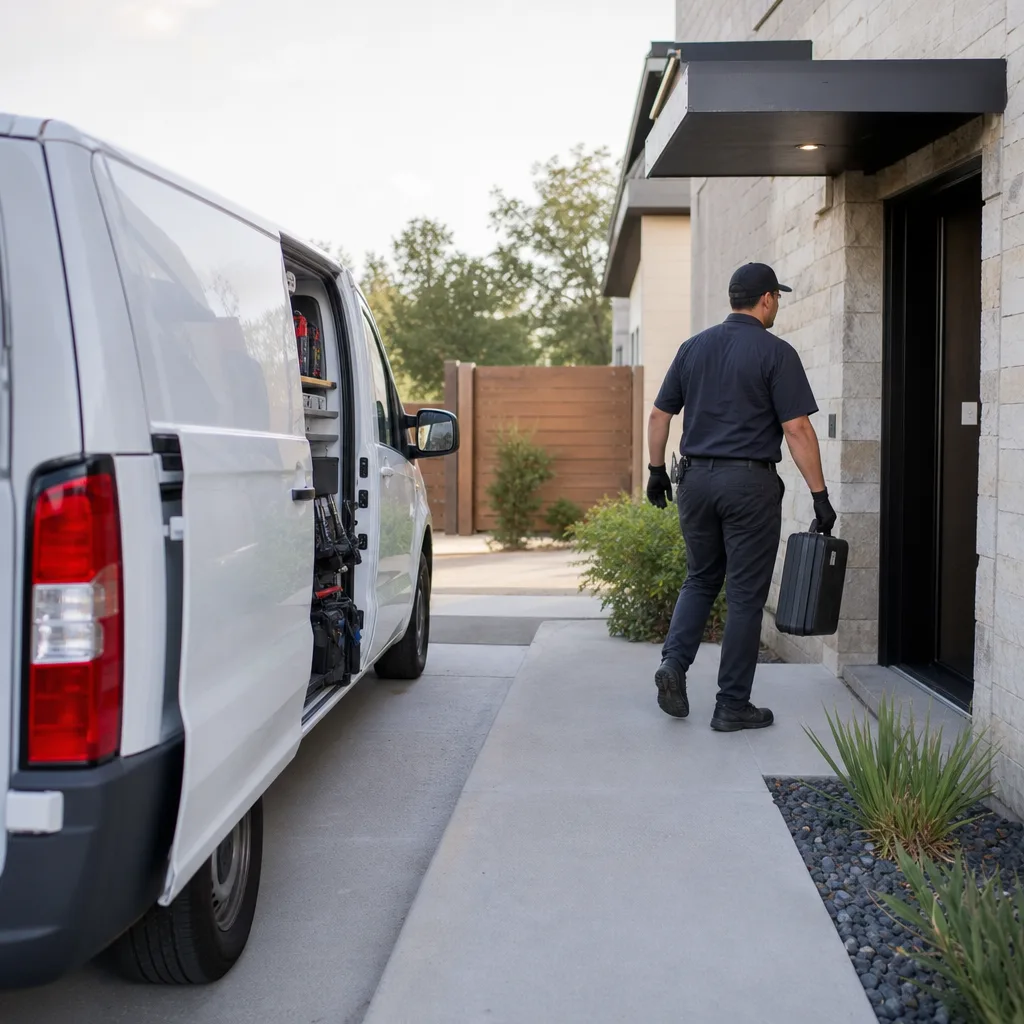
Certain situations in Fort Worth demand immediate professional attention rather than DIY attempts or delayed scheduling. A broken key extracted from a dead cylinder requires specialized tools that preserve the lock body. A home lockout with a child or pet inside is a safety emergency, not a convenience issue. Commercial properties with access control failures may have fire code implications under Fort Worth building regulations.
Automotive lockouts present particular risks. Modern vehicles with proximity keys and immobilizer systems can sustain thousands in damage from improper entry attempts. The cost of professional service is typically minor compared to dealer reprogramming or bodywork.
Novak Lock & Security Fort Worth offers free estimates for non-emergency work throughout Fort Worth. Call (817) 765-4998 to describe your situation, receive a firm written price, and schedule service at your convenience. Emergency calls are answered by a live person 24/7, with the same pricing transparency applied to after-hours service.
Frequently Asked Questions
Lock rekeying in Fort Worth typically runs $19-$35 per cylinder for standard residential hardware, with a trip charge of $45-$75 depending on location and timing. Lockout service during standard hours generally ranges $75-$150 for residential, higher for commercial or automotive with advanced key systems. High-security installations using Medeco or Mul-T-Lock cylinders start around $180 per lock including labor. Call (817) 765-4998 for an exact quote - estimates are free, and the price quoted is the price on the invoice under Haven Standard Clause 1. For detailed pricing context, see our Locksmith Cost Breakdown: The Fort Worth Homeowner’s Reference for 2026.
At Novak Lock & Security Fort Worth, yes - contractually and without exception. Haven Standard Clause 1 prohibits technicians from changing the phone-quoted price at the door. This rule has been in place since 2002. If you receive a quote from another Fort Worth locksmith, ask explicitly whether the price is locked. “Estimate,” “starting at,” or “plus parts and labor” indicate variable pricing that frequently exceeds the initial quote.
Verify through the Texas DPS PSB License Search at txapps.texas.gov/PSB_Search/. Enter the company name, confirm “Active” status, and note the license number. Ask the dispatcher for this number before providing your address. A legitimate locksmith provides it immediately. An unlicensed operator may deflect, claim the number is “internal,” or offer to have the technician show credentials on arrival - which is too late.
Do not pay the inflated amount. Request the original quoted price in writing. If the technician refuses, decline service and call another provider. Document the interaction: technician name, vehicle description, any identification shown. File a complaint with the Texas DPS Private Security Bureau and the Fort Worth Police Department if threats or coercion occur. A locked price, confirmed in writing before dispatch, prevents this scenario entirely.
Yes. Texas law requires locksmith licensing for any person who performs locksmith services, regardless of job complexity. This includes lockouts, rekeys, lock installation, and key duplication. The license requirement is not waived for “simple” work. An unlicensed individual performing these services commits a criminal offense.
Response times vary by location, time of day, and current demand. Fort Worth’s geographic spread - from far north Alliance to south Crowley - means that a dispatcher promising “15 minutes” from a central location is likely unrealistic for outlying areas. A legitimate local operation provides an honest estimated arrival window based on technician location and traffic conditions. At Novak Lock & Security Fort Worth, we quote specific arrival windows rather than optimistic guarantees, and we update customers if conditions change.
The Bottom Line
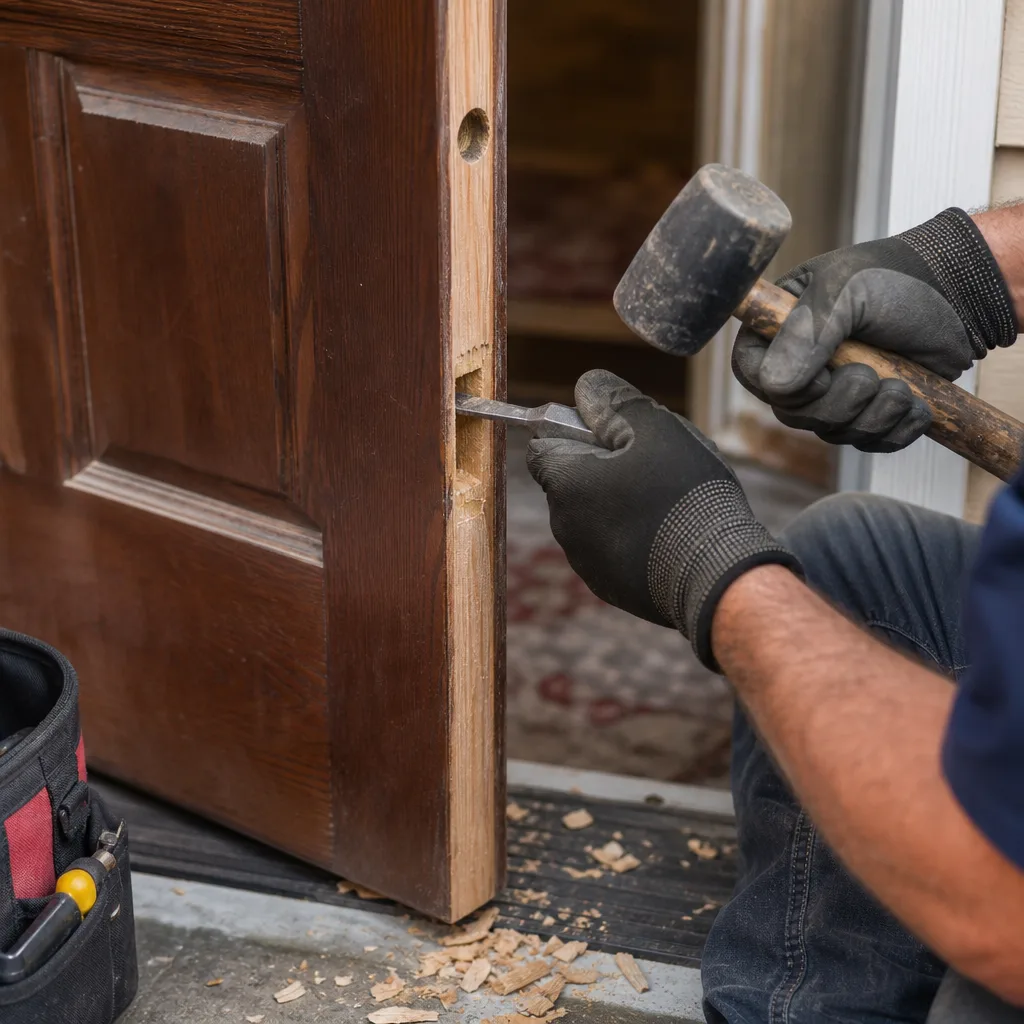
Hiring a locksmith contractor in Fort Worth is a two-minute vetting process if you execute three checkpoints: verify the Texas DPS license on the state portal, demand a firm written price that is contractually locked before arrival, and confirm a physical Fort Worth address rather than a virtual operation. These steps eliminate the lead-generation schemes and bait-and-switch operations that dominate consumer complaints in this trade. The tools are free, the verification is public, and the protection is absolute. For more guides & resources, visit our blog. A legitimate Fort Worth locksmith will welcome your diligence. A fraudulent operation will resist it. That resistance is itself the signal to call elsewhere.
Written by Daniel Novak, Owner at Novak Lock & Security Fort Worth, serving Fort Worth since 2002.