
Last updated September 25, 2026
Non-destructive entry first, always - and we re-key Schlage, Kwikset, and Baldwin locks on the spot while you watch
You get a price before we start. It does not change when we arrive. No surprises.
Locksmith Permits, Codes & Inspections in TX: What You Need to Know
Texas Occupations Code Chapter 1702 requires every locksmith technician in the state to carry a pocket card issued by the Department of Public Safety, a requirement that has been in force since 1993. Yet in our experience across Fort Worth neighborhoods from Tanglewood to Fairmount, fewer than one in ten customers ever asks to see it. This guide explains what Texas law actually requires, what it permits you to do yourself, and where the regulatory gaps can cost you money or compromise your security. For more guides & resources, visit our blog.
Quick Answer
Texas requires locksmiths to hold both a company license and individual technician registrations through DPS. Homeowners may legally rekey their own locks and duplicate keys on their own property. Rekeying a rental unit triggers Texas Property Code § 92.153, which requires landlords to rekey within seven days of a new tenant. Most locksmith work in Fort Worth does not require a city permit, though access control systems tied to building electrical systems may trigger an electrical permit.
Table of Contents
- Company License vs. Technician Registration: Two Separate Requirements
- What Homeowners Can Legally Do Themselves
- Landlord Rekey Requirements Under Texas Property Code § 92.153
- Filing a Complaint with Texas DPS Regulatory Services
- When Fort Worth Building Permits Actually Apply
- How to Verify a Locksmith License in Texas
- High-Security Locks and Additional Compliance Layers
- Common Mistakes to Avoid
- When to Call a Professional
- Frequently Asked Questions
Company License vs. Technician Registration: Two Separate Requirements
Texas law draws a sharp line between the business that employs locksmiths and the individuals who perform the work. Both must be registered with the Texas Department of Public Safety, but they are checked separately, and a valid company license does not mean every employee is legal.
A locksmith company must hold a Private Security Employer License issued under Occupations Code Chapter 1702. This license covers the business entity, its insurance requirements, and its bonding. The company must maintain a minimum $10,000 surety bond and general liability coverage. The license number should be displayed on all advertising, invoices, and vehicles.
An individual locksmith technician must hold a pocket card, formally called a Registration for a Security Services Contractor Employee. This card includes the technician’s photograph, registration number, and expiration date. The technician must carry it during work hours and present it upon request.
We have encountered locksmith warning signs in Fort Worth where a company license checked out but the dispatched technician’s registration had lapsed. The company is liable in this scenario, but the homeowner or business owner who failed to check the pocket card has little immediate recourse if work is performed improperly.
Key distinctions:
- Company licenses are verified through the DPS online lookup by business name
- Individual registrations are verified by the registration number on the pocket card
- A company may employ unregistered technicians only if they are in training under direct supervision of a registered locksmith, and even then, they cannot perform unsupervised work
- Both licenses expire and must be renewed; the pocket card typically shows a two-year term
At Novak Lock & Security Fort Worth, every technician dispatched carries current DPS registration. We state the registration number when scheduling if the customer requests it, and the technician presents the pocket card before beginning work.
What Homeowners Can Legally Do Themselves
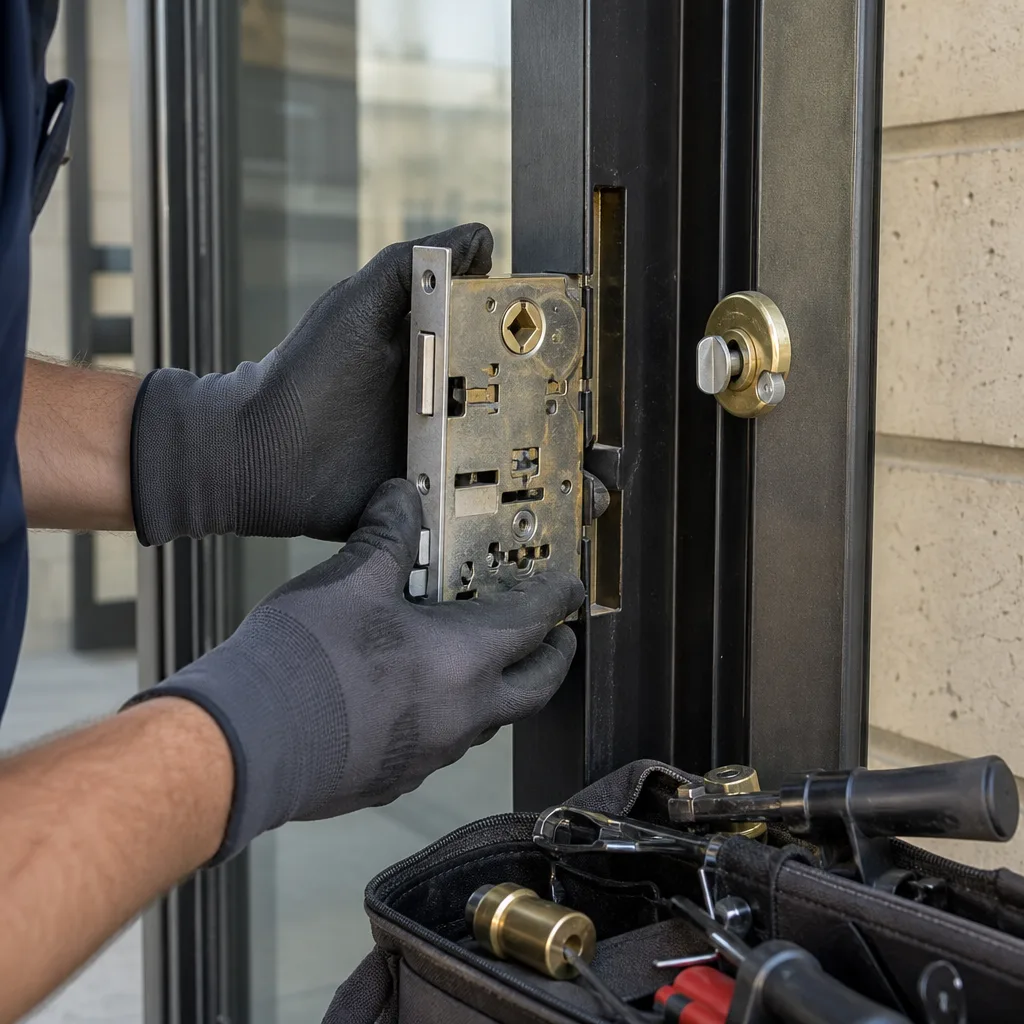
Texas law permits property owners to perform locksmith work on their own residential property without any license or registration. This includes rekeying pin-tumbler cylinders, installing new locksets, duplicating keys, and even master-keying your own home. The exemption applies to the property owner, immediate family members residing at the property, and employees of the owner working under direct instruction.
Where the line appears: you may not perform locksmith work for compensation on property you do not own without a license. This means a handyman who rekeys your neighbor’s lock for $50 is operating illegally if unregistered. It also means a property manager who rekeys a rental unit themselves, rather than hiring a licensed locksmith, occupies a gray area that has not been fully tested in Texas courts.
What homeowners in Fort Worth typically handle themselves:
- Rekeying a Kwikset or Schlage deadbolt after moving into a new home, using a rekeying kit purchased at a hardware store
- Installing a new entry lockset on an existing prepped door
- Duplicating standard keys at a self-service kiosk
- Replacing a broken latch on an interior door
What we recommend against attempting without training:
- Rekeying high-security cylinders such as Medeco or Mul-T-Lock, which use sidebar mechanisms and proprietary keyways that require factory-authorized tools and pinning kits
- Installing an access control system tied to a fire alarm or electrical panel, which may violate Fort Worth Fire Prevention Code and void insurance coverage
- Rekeying locks that are part of a master key system, where an error compromises security across multiple units or doors
- Any work on safe locks or vault doors, where incorrect manipulation can lock the container permanently
The practical risk of DIY rekeying is not legal, it is mechanical. A pin installed backward, a spring dropped into the cylinder, or a key cut to incorrect depths will leave the lock inoperable. In our experience, roughly one in four self-rekeyed locks in the Fort Worth area requires professional correction within six months.
Landlord Rekey Requirements Under Texas Property Code § 92.153
Texas Property Code § 92.153 imposes a specific obligation on landlords that many property owners in Fort Worth do not fully understand. When a new tenant takes possession of a residential rental unit, the landlord must rekey or replace the locks within seven days. This applies to exterior doors and any interior door that the tenant is entitled to have keyed to exclude others, such as a bedroom door in a shared housing arrangement.
The statute does not require the landlord to hire a licensed locksmith. The landlord may perform the rekeying themselves if they own the property. However, the rekeying must actually occur, and it must be documented. Failure to rekey within the seven-day window exposes the landlord to liability if the previous tenant retains a key and enters the unit.
Critical details from the code:
- The seven-day clock starts when the new tenant takes possession, not when the lease is signed
- The landlord must rekey even if the previous tenant returned all keys and appeared cooperative
- If the landlord fails to rekey and a burglary or assault occurs using the previous tenant’s key, the landlord’s liability increases substantially
- The tenant may terminate the lease, repair the condition and deduct the cost, or obtain a court order requiring compliance
Fort Worth’s rental market, particularly in the Near Southside and West 7th corridor, includes many small landlords managing two to four units. These owners often handle rekeying themselves to save the $15-$25 per cylinder that a locksmith charges. The risk is not the DIY aspect, it is the failure to document that the rekey occurred within seven days. We recommend landlords retain the dated receipt for the rekeying kit or, if hiring a professional, the invoice showing the date of service.
For multi-unit properties in Fort Worth with commercial locksmith needs, we provide written documentation of every rekey with a timestamped photo record, which satisfies both the statutory requirement and any future dispute.
Filing a Complaint with Texas DPS Regulatory Services
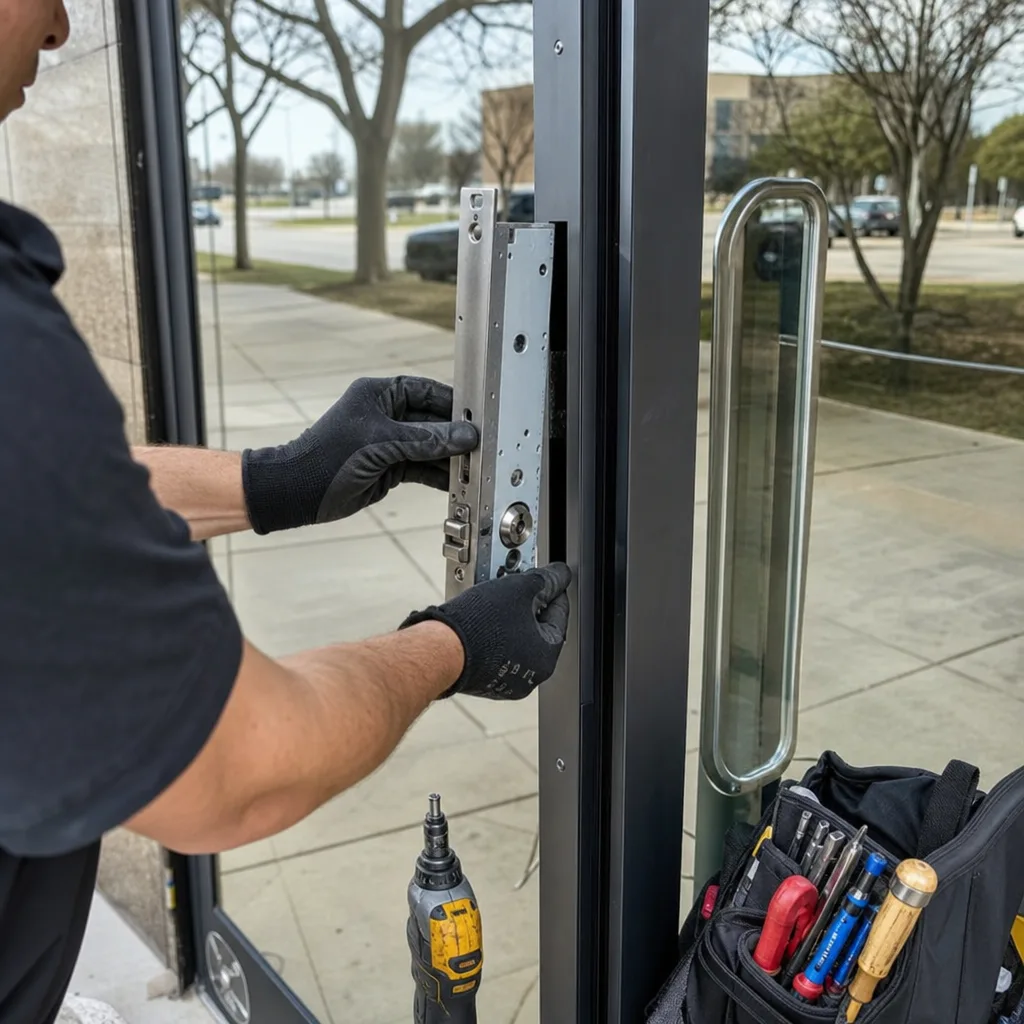
The Texas Department of Public Safety Regulatory Services Division handles complaints against licensed locksmiths and unlicensed operators. This is the enforcement arm of Chapter 1702, and it has authority to investigate, impose administrative penalties, and refer criminal cases to local prosecutors.
Grounds for complaint include:
- Performing locksmith work without required registration or company license
- False representation of license status, including advertising a license number that does not belong to the advertiser
- Conviction of certain crimes after licensure, including burglary, theft, or fraud
- Failure to maintain required bond or insurance
- Deceptive trade practices in connection with locksmith services
The complaint process begins with a form submitted online or by mail to DPS Regulatory Services in Austin. The complainant must provide specific information: the name of the individual or company, date of service, description of the violation, and any supporting documentation. Photographs of advertising, invoices, and the technician’s pocket card (if obtained) strengthen the complaint substantially.
What DPS can do:
- Issue a warning or require corrective action for first-time administrative violations
- Impose fines ranging from $100 to $10,000 per violation
- Suspend or revoke individual registrations or company licenses
- Refer cases involving unlicensed activity to the county district attorney for misdemeanor prosecution
What DPS cannot do:
- Order a locksmith to refund money or perform corrective work, that requires civil court
- Act on anonymous complaints, the complainant must be identified
- Investigate complaints more than two years old in most cases
In Fort Worth, we have seen DPS act most swiftly on complaints involving unlicensed operators who advertise on neighborhood social media groups, particularly in the Ryan Place and Berkeley Place areas where older homes with original hardware attract inexperienced operators claiming vintage lock expertise.
When Fort Worth Building Permits Actually Apply
Most locksmith work in Fort Worth does not trigger a building permit. Rekeying, lock replacement, and even new lock installation on existing doors are considered maintenance or minor alterations that fall below the permit threshold in the Fort Worth Building Code.
However, certain projects cross into regulated territory:
| Project Type | Permit Required? | Regulatory Basis |
|---|---|---|
| Standard deadbolt installation on existing door | No | Maintenance exemption |
| Electric strike or magnetic lock installation | Sometimes | Electrical permit if tied to building power |
| Access control system with new wiring | Yes | Electrical and possibly low-voltage permit |
| Door hardware modification affecting fire rating | Yes | Fire Prevention Code, must maintain labeled assembly |
| Safe or vault installation (freestanding) | No | Not regulated if not anchored to structure |
| Safe or vault installation (anchored to slab or wall) | Sometimes | Structural permit if anchoring affects building structure |
The most common permit trigger we encounter involves access control systems in Fort Worth commercial buildings. When a magnetic lock or electric strike draws power from the building’s electrical system, the installation requires an electrical permit and inspection by the Fort Worth Development Services Department. The locksmith may perform the mechanical installation, but a licensed electrician must handle the electrical connection, and the work must pass inspection.
Fire-rated doors present a separate compliance layer. A door assembly rated for 20, 45, 60, or 90 minutes must maintain its labeled configuration. Replacing a lock on a fire-rated door with hardware not listed for that rating voids the assembly and may violate Fort Worth Fire Prevention Code. We verify the fire label on every commercial door we service and specify listed hardware in our written scope, following our Commercial Locksmith Maintenance Checklist for Fort Worth Homeowners.
For residential locksmith work in Fort Worth, permit questions arise most often with new construction or major renovation. If your contractor is pulling permits for a whole-house remodel, include lock installation in the scope. If you are replacing a lock on an existing door, no permit is required.
How to Verify a Locksmith License in Texas
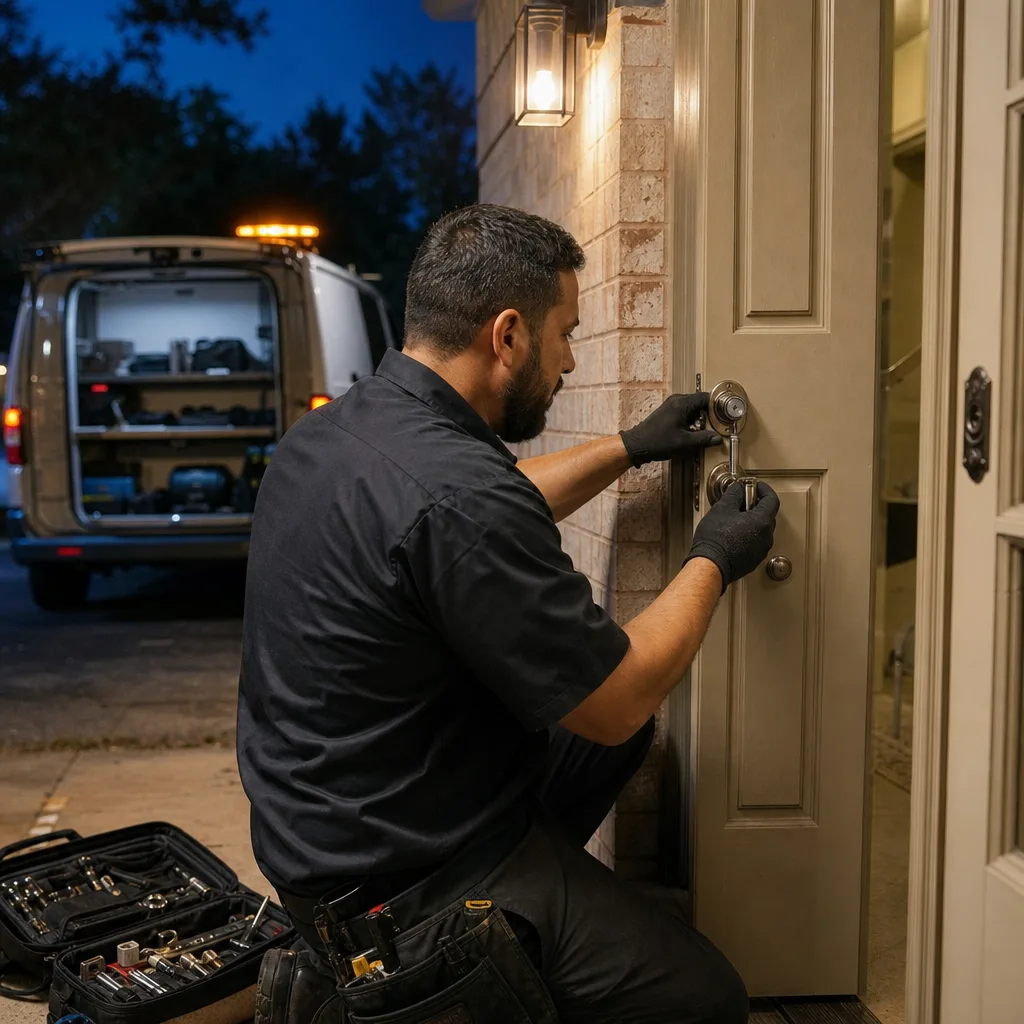
Verifying a locksmith’s credentials in Texas takes approximately two minutes and can prevent significant financial and security problems. The DPS maintains an online license lookup that is free and does not require account creation.
Step-by-step verification:
- Navigate to the Texas DPS Regulatory Services license search portal
- Select “Private Security” as the license category
- Enter the company name or individual name as it appears on the invoice or business card
- Review the search results for matching entries, noting the license number, status (active, expired, suspended), and expiration date
- For individual technicians, request the pocket card and verify the registration number against the online record
- Confirm the company license covers the address from which the technician was dispatched, some companies operate multiple locations under separate licenses
Red flags that should stop the transaction:
- The company name in the DPS database does not match the name on the invoice or vehicle
- The license status shows “expired,” “suspended,” or “revoked”
- The technician cannot or will not produce a pocket card
- The pocket card photograph does not match the technician at your door
- The company license is valid but the individual registration number is not found in the database
We encourage every Fort Worth customer to perform this verification, even with established providers. License status changes, companies restructure, and technicians move between employers. The Haven Standard Clause 3 requires our technicians to present pocket cards proactively, but we welcome the customer who verifies independently.
High-Security Locks and Additional Compliance Layers
High-security lock brands including Medeco, Mul-T-Lock, and Abloy operate under manufacturer-controlled distribution that adds compliance requirements beyond Texas state law. These locks are not sold through standard wholesale channels, and factory authorization is required to purchase key blanks, pinning kits, and proprietary tools.
What this means for Fort Worth property owners:
- A locksmith who installs Medeco or Mul-T-Lock without factory authorization cannot obtain replacement keys or perform warranty service
- Key duplication for these brands requires presentation of a registered key code card, which the original purchaser should receive at installation
- Unauthorized duplication, even by a licensed locksmith, violates the manufacturer’s intellectual property protections and voids the security guarantee
We are factory-authorized for Medeco, Mul-T-Lock, and Abloy, and we register every installation with the manufacturer. The customer receives the key code card and a written warranty document at completion. This is standard procedure, not an upgrade.
Yale and Baldwin operate under less restrictive distribution but still maintain authorized dealer networks for their commercial and high-end residential lines. Factory authorization ensures access to current product specifications, recall notices, and technical support. For commercial locksmith applications in Fort Worth, we specify authorized products in our written scope and provide the corresponding documentation.
Common Mistakes to Avoid
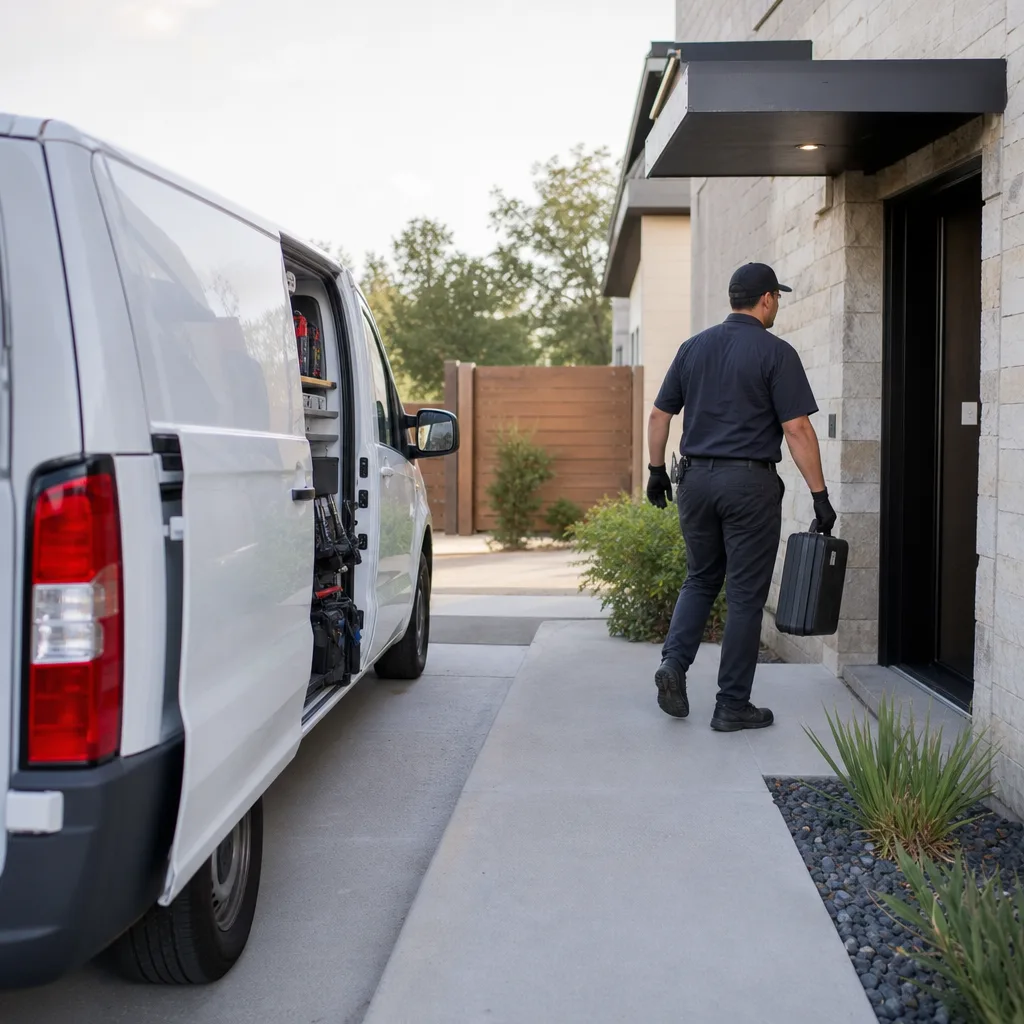
- Hiring based on the lowest phone quote without verifying license status. Unlicensed operators in Fort Worth frequently advertise prices below market rate, then escalate charges on arrival. The DPS database is the first check, not the last.
- Assuming a company license covers every technician who arrives. We have corrected work performed by unregistered employees of otherwise licensed companies. Ask for the pocket card before work begins.
- DIY rekeying a rental unit without documenting the date. Texas Property Code § 92.153 requires rekeying within seven days of new tenant possession. A hardware store receipt with date and time satisfies this if a professional invoice is not obtained.
- Installing access control hardware without checking electrical permit requirements. In Fort Worth, this most commonly occurs in small commercial buildings where the owner assumes the locksmith handles all compliance. The locksmith handles the lock; the electrician handles the power; the building department handles the inspection.
- Replacing hardware on fire-rated doors with non-listed products. This voids the fire rating and may invalidate insurance coverage. We check the fire label and specify listed hardware in every commercial scope.
- Failing to obtain key code cards for high-security installations. Without the card, future key duplication requires drilling and replacing the cylinder, a $200-$400 expense that a two-minute documentation step prevents.
When to Call a Professional
Call a licensed locksmith when the work affects security documentation, insurance compliance, or multiple parties’ access rights. Specific scenarios: you have moved into a new home and need the locks rekeyed with a written record of which keys now operate; you manage rental property and must comply with Texas Property Code § 92.153; you are installing access control that ties to building electrical systems; you need high-security cylinders that require factory authorization; or you have received a competitor’s written estimate and want a free second opinion.
Novak Lock & Security Fort Worth offers free estimates in Fort Worth. Every estimate is delivered in writing before any work begins, under Haven Standard Clause 1: the price on the phone is the price on the invoice. Call (817) 765-4998.
Frequently Asked Questions
Ask to see the DPS pocket card and verify the registration number on the Texas DPS Regulatory Services website. The company should also provide its Private Security Employer License number on all invoices and advertising. Call (817) 765-4998 and we will state our registration numbers before dispatch.
No. Texas law permits property owners to perform locksmith work on their own residential property without a license. The exemption does not extend to work performed for compensation on property you do not own. If you are a landlord, you may rekey your own units, but you must document the date to comply with Texas Property Code § 92.153.
You may terminate the lease, repair the condition and deduct the cost from rent, or obtain a court order requiring compliance. If a break-in occurs using the previous tenant’s key during this period, the landlord’s liability increases. Document your written request for rekeying and the landlord’s response.
No. Standard lock installation on an existing door is maintenance work that does not require a Fort Worth building permit. Permits are required for access control systems tied to building electrical systems, modifications to fire-rated door assemblies, and structural anchoring of safes or vaults.
Yes. File with Texas DPS Regulatory Services online or by mail. Include the individual’s name, company name, date of service, description of the violation, and any supporting documentation. DPS can impose fines up to $10,000 per violation and refer criminal cases to prosecutors. They cannot order refunds; that requires civil court action.
The company license covers the business entity, its bonding, and its insurance. The technician registration covers the individual performing the work. Both are required, they are checked separately, and a valid company license does not guarantee that every employee is registered. Always verify both.
The Bottom Line
Texas locksmith law creates a two-tier verification system: company license and individual registration. Homeowners may perform their own work but should understand the limits, particularly with high-security hardware and rental property compliance. Fort Worth building permits apply only to specialized installations, not standard lock service. The most effective protection is the verification that takes two minutes before the technician begins work. Ask for the pocket card. Check the DPS database. Get the scope and price in writing. These steps cost nothing and prevent the most common problems we are called to correct.
Written by Daniel Novak, Owner at Novak Lock & Security Fort Worth, serving Fort Worth since 2002.