
Last updated September 25, 2026
Non-destructive entry first, always - and we re-key Schlage, Kwikset, and Baldwin locks on the spot while you watch
You get a price before we start. It does not change when we arrive. No surprises.
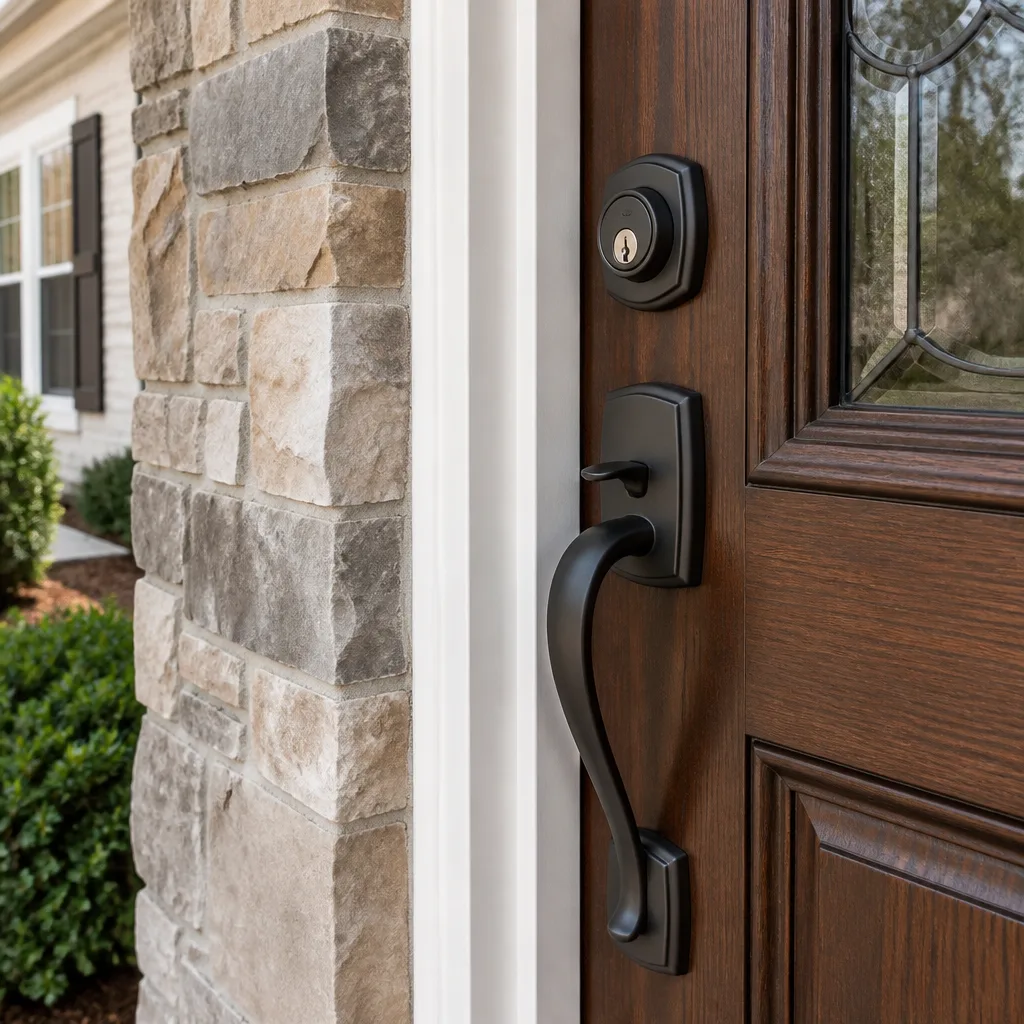
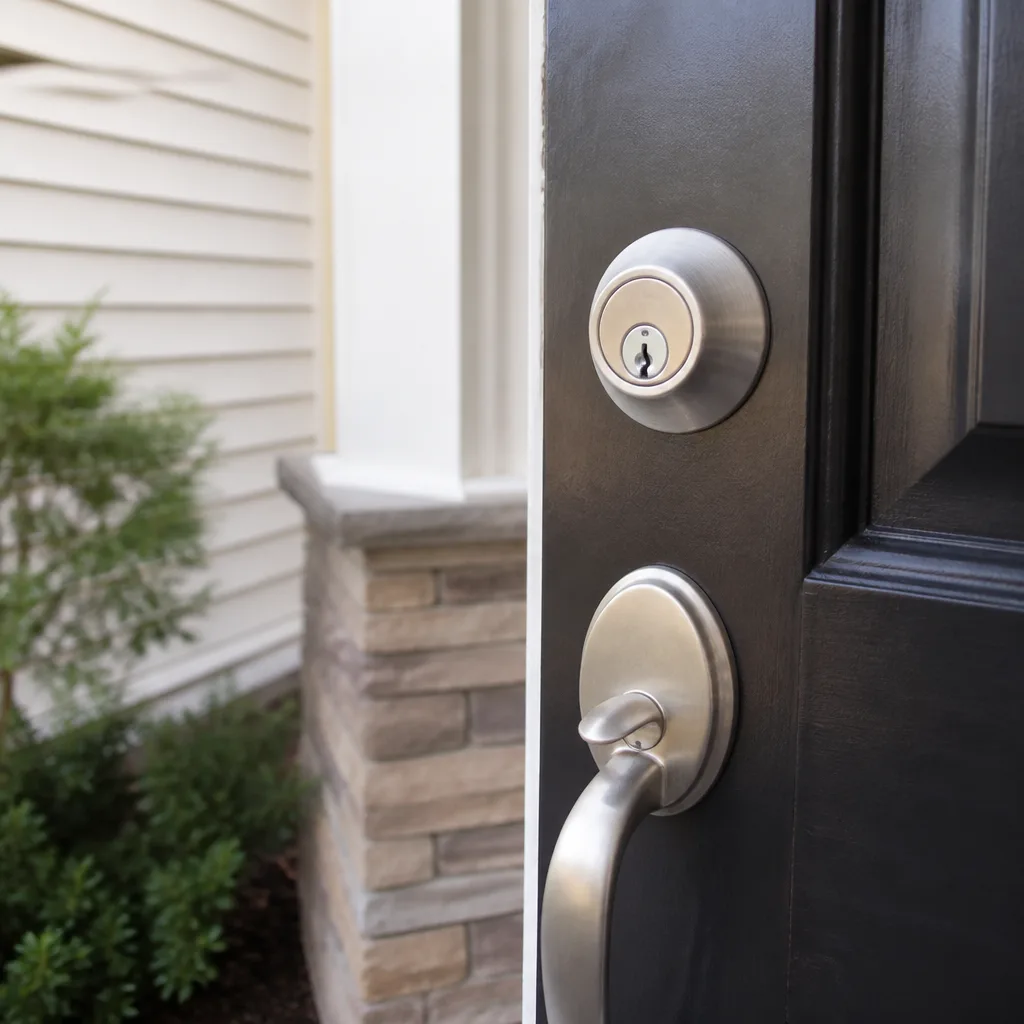
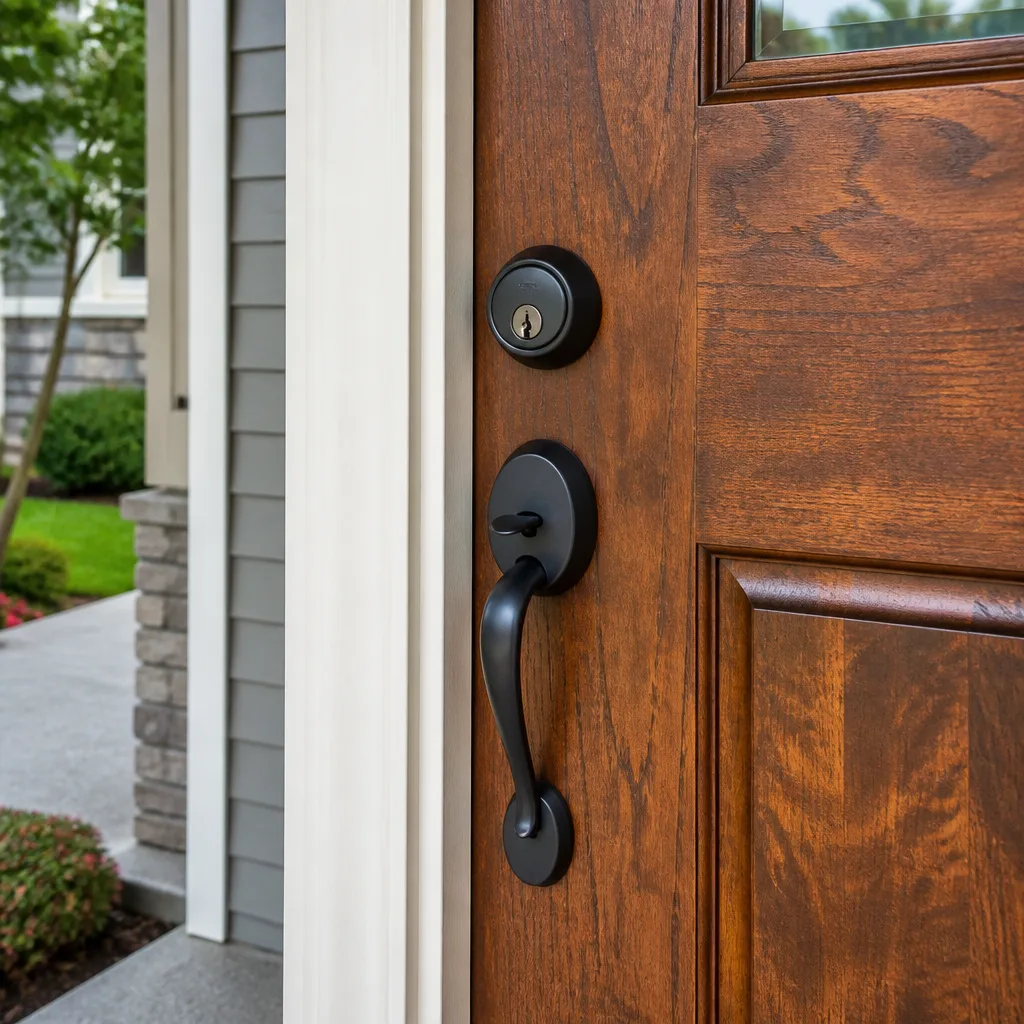
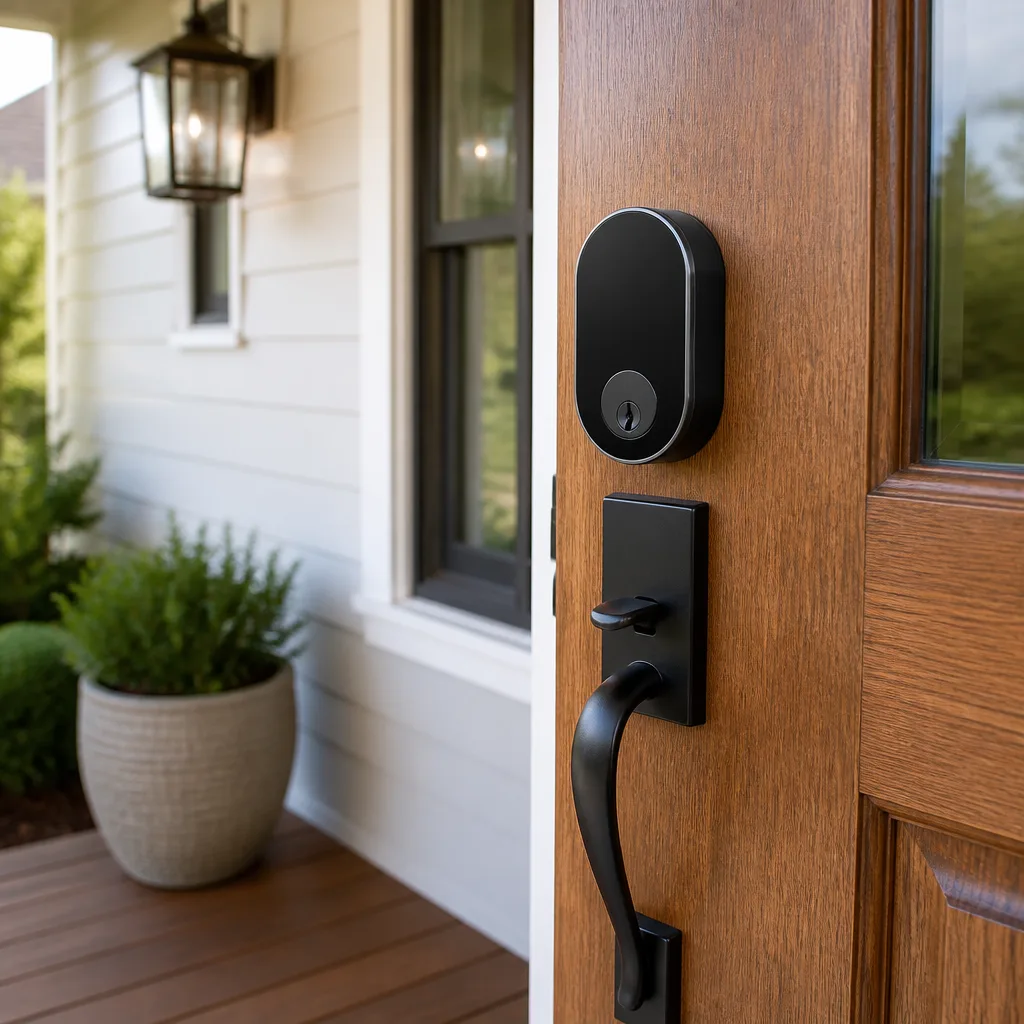
Commercial Locksmith Maintenance Checklist for Fort Worth Homeowners
The title says “homeowners,” but the hardware doesn’t care about labels. A Fort Worth strip-mall suite with a Grade 2 cylindrical lockset on a high-traffic door will show measurable wear in 14 months, the same failure window as a residential front door that sees 20 years of normal use. Whether you’re managing a rental property, a home-based business with client traffic, or a commercial building in the Near Southside, Commercial Locksmith services can help ensure your maintenance schedule is driven by door cycles and Texas weather, not zoning codes. This guide gives you a documented inspection checklist that produces evidence an insurance carrier or property management audit will accept. You’ll learn how ANSI/BHMA grades map to real traffic counts, what Fort Worth fire code requires for egress hardware, which lubricants destroy commercial cylinders, and how to build a paper trail that protects you in a liability claim.
Quick Answer
For The Complete Guide to Locksmith in Fort Worth, commercial lock maintenance should happen twice yearly: a full inspection every spring after freeze-thaw cycles end, and a targeted check every fall before heavy holiday traffic. A proper checklist covers ANSI/BHMA grade verification, panic hardware function, access control reader alignment, key-control log accuracy, and lubrication with the correct compound for each hardware type. Document everything with dated photos and written findings; this record is what your insurance carrier or property manager will request after an incident.
Table of Contents
- Why ANSI/BHMA Grade Ratings Matter More Than Brand Names
- Room-by-Room Commercial Lock Inspection Checklist
- Texas Fire Code Requirements for Egress Hardware
- How to Document Findings for Insurance and Audit Compliance
- Lubrication Types by Hardware Category (And Why Graphite Is Usually Wrong)
- How Fort Worth Weather Cycles Accelerate Hardware Failure
- Key-Control Log Maintenance and Master Key System Audits
- Access Control System Physical Maintenance
Why ANSI/BHMA Grade Ratings Matter More Than Brand Names
We see this mistake in Fort Worth commercial properties weekly: a landlord installs a handsome Baldwin deadbolt on a retail entry door because the finish matches the façade, then calls us 18 months later when the latch won’t retract. The lock isn’t defective. It’s mis-specified. Baldwin makes excellent hardware, but that particular residential-grade deadbolt was never designed for 400 door cycles per day.
ANSI/BHMA grading is the only specification that predicts lifespan under load. Here’s how the grades map to actual Fort Worth use cases:
| Grade | Minimum Cycles | Typical Application | Fort Worth Example |
|---|---|---|---|
| Grade 1 | 800,000 cycles | High-traffic commercial entries | West 7th Street restaurant front door, Hulen Mall service corridor |
| Grade 2 | 400,000 cycles | Light commercial, heavy residential | Magnolia Avenue boutique, professional office in Sundance Square |
| Grade 3 | 200,000 cycles | Standard residential | Single-family home, low-traffic apartment unit door |
The cycle math is straightforward. A Fort Worth coffee shop on Camp Bowie that opens at 6 AM and averages one customer every three minutes until 8 PM is pushing 280 cycles daily. A Grade 2 lockset reaches its design limit in about four years. A Grade 1 lockset buys you eight. But here’s what most competitors won’t tell you: cycle testing assumes climate-controlled conditions. In Fort Worth, where summer surface temperatures on south-facing metal doors exceed 140°F and winter lows dip into the teens, the effective cycle life drops by 20-30% for hardware without thermal break features.
When we spec hardware for commercial locksmith work in Fort Worth, we count actual daily cycles, add 25% for Texas thermal stress, then select the grade. We also document the calculation in writing, per Haven Standard Clause 1, so the property owner has the specification record if a liability question arises later.
Quick check: count door cycles for one week, divide by seven, multiply by 365. If you’re over 200 daily and running Grade 2 hardware, you’re operating beyond specification. Upgrade before failure, not after.
Room-by-Room Commercial Lock Inspection Checklist
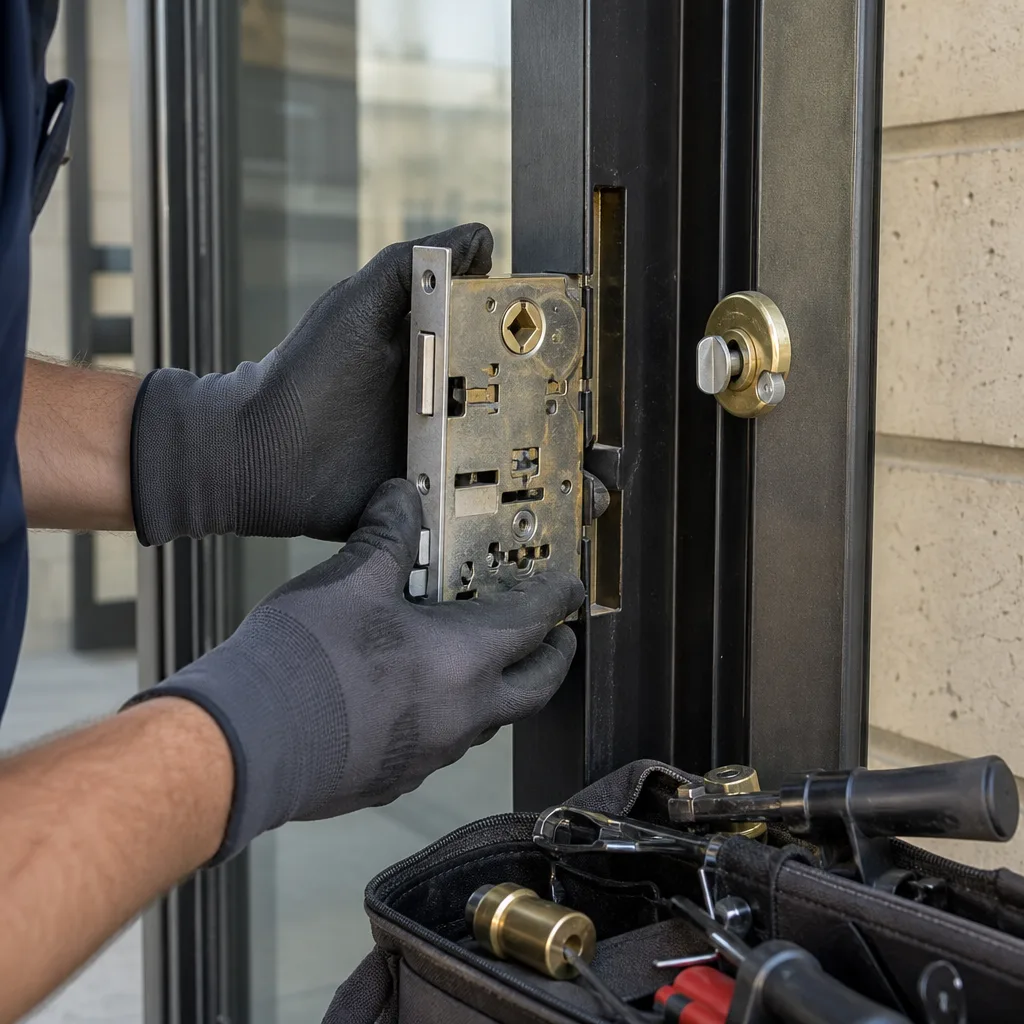
This checklist applies to any Fort Worth property with commercial-grade hardware, whether it’s a standalone building in the Cultural District, a mixed-use property in Fairmount, or a home office with client access. We perform these inspections on a six-month cycle for our maintenance clients. You can run it yourself or use it to evaluate a contractor’s scope.
Entry Doors (All Public-Facing)
- Check door alignment. Close the door and inspect the gap between frame and door edge. Uneven gaps indicate hinge sag or frame shift, common in Fort Worth’s expansive clay soils. Misalignment causes latch bolt wear and premature failure.
- Test latch retraction force. With the door open, turn the lever or knob. The latch should retract smoothly with moderate pressure. Binding, grinding, or a “catch” at any point in the throw indicates internal wear or debris.
- Inspect strike plate alignment. The latch should enter the strike center without scraping. Scrape marks on the strike face prove misalignment that will eventually cause latch failure.
- Verify deadbolt throw. Extend the deadbolt fully. On a properly installed Grade 1 or 2 deadbolt, the bolt should project at least one inch into the strike. Less than one inch fails most commercial insurance inspections.
- Test key operation. Insert the key at multiple angles. Smooth rotation with slight resistance is correct. Grinding, catching, or the need to jiggle the key indicates pin chamber wear or key duplication drift.
Panic Hardware / Exit Devices
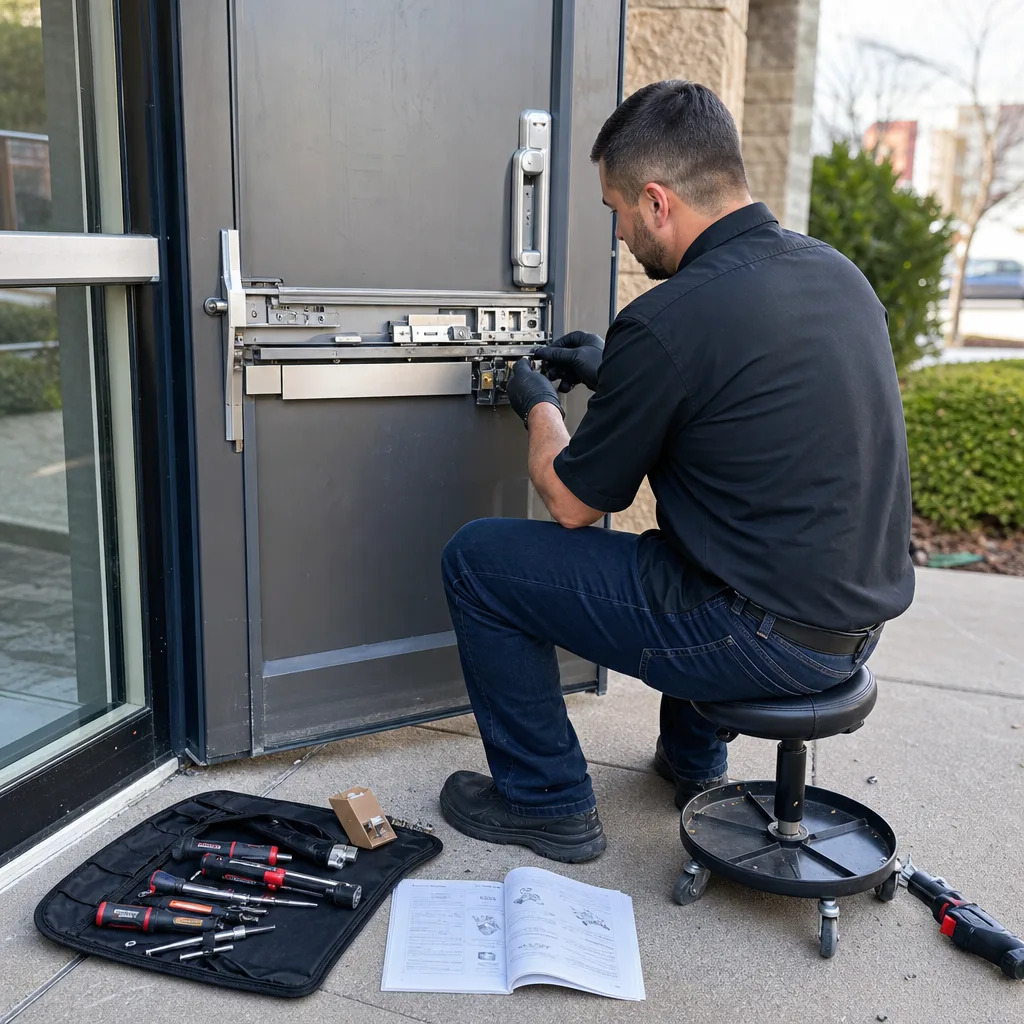
- Test touch-bar operation. Press the bar at its center and at both ends. Release should be instantaneous; delayed return indicates spring fatigue or lubrication breakdown.
- Verify dogging function (if equipped). Dogging holds the bar retracted for free entry during business hours. Test both hex-key and thumb-turn dogging. Failed dogging forces constant bar pressure against the latch mechanism.
- Inspect rim cylinder alignment. The cylinder face should sit flush with the escutcheon. Protrusion or recession indicates loose mounting or frame movement.
- Check bottom rod and latch (vertical rod devices). These fail silently. Open the door fully and inspect whether the bottom rod retracts fully and the bottom latch clears the floor strike. In Fort Worth, foundation movement often drops floor strikes out of alignment.
Storeroom and Utility Locks
- Confirm storeroom function. A proper storeroom lockset always locks when the door closes, requires a key to enter, and always allows free egress. Test both sides independently.
- Inspect cylinder security. Standard pin-tumbler cylinders in low-supervision areas are vulnerable to bumping and picking. Consider upgrading to Mul-T-Lock or Sargent high-security cylinders in supply rooms with inventory value.
- Check for unauthorized key duplication. If your keys aren’t stamped “Do Not Duplicate” and your cylinders aren’t restricted-keyway, you have no key control. We replace unauthorized duplicates during maintenance visits and log the serial numbers.
Interior Office and Conference Room Locks
- Test privacy / passage function. Privacy locks should engage and disengage cleanly. Passage sets should have no locking function whatsoever; if they do, they’re mis-specified.
- Inspect lever return spring. Levers that droop indicate spring failure. This is a wear item, not a defect, but it progresses to latch failure if ignored.
Texas Fire Code Requirements for Egress Hardware
Fort Worth operates under the 2021 International Building Code with Texas amendments, enforced by the Fort Worth Fire Prevention Division. For commercial properties, the egress requirements are specific and inspectable. A standard locksmith maintenance visit should verify compliance; failure to document this exposes the property owner to liability if an egress failure contributes to injury.
The requirements that apply to most Fort Worth commercial properties:
- Single-motion egress. Any door on an egress path must open with a single operation: one motion to release the latch and open the door. Double-cylinder deadbolts (key required on both sides) are prohibited on egress doors in commercial occupancies. We remove these during maintenance calls and replace them with code-compliant hardware.
- Maximum 15-pound release force. The force to release the latch and start the door moving must not exceed 15 pounds. We test this with a calibrated gauge; “feels fine” is not documentation.
- Panic hardware on high-occupancy doors. Assembly occupancies (restaurants, theaters, event spaces) with 50 or more occupants require panic hardware. Fort Worth inspectors check this during annual fire inspections; we verify it during lock maintenance so there are no surprises.
- Fire-rated door hardware. Doors in rated corridors must carry hardware with matching fire ratings. The label is on the door edge and the hardware packaging. We photograph both during inspection.
In our experience, the most common Fort Worth violation is a former residential property converted to commercial use without hardware upgrades. A duplex in the Near Southside converted to office space retains its original keyed deadbolts on egress doors. The owner assumes the existing hardware is grandfathered; it is not. Any change of occupancy triggers current code compliance.
We document fire-code findings on a separate form, with photos of labels and measurements, and provide a copy to the property owner for their fire inspection file. This documentation has prevented citation in three Fort Worth properties we maintain when fire inspectors identified adjacent violations and requested hardware compliance records.
How to Document Findings for Insurance and Audit Compliance
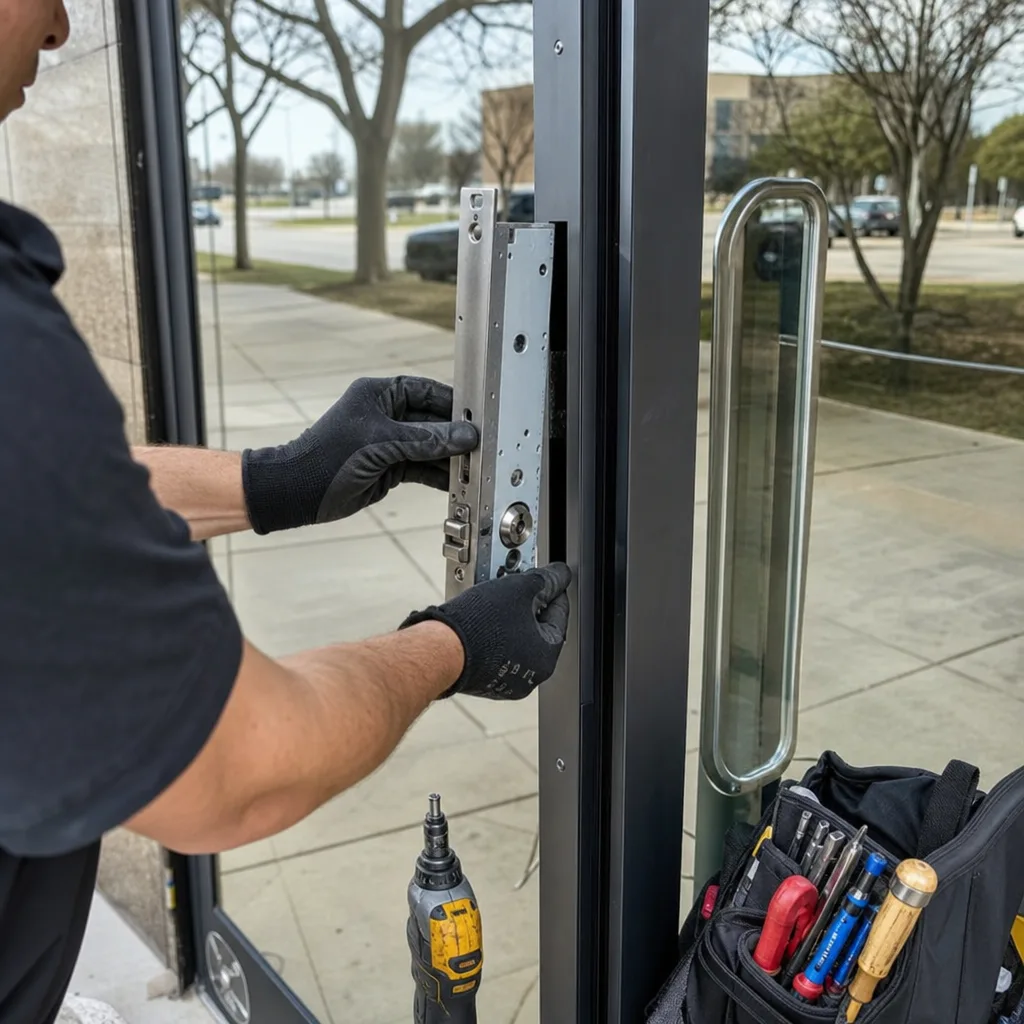
The maintenance checklist is only as valuable as the paper trail it produces. After a slip-and-fall, a break-in, or a fire inspection failure, your insurance carrier or property management auditor will request maintenance records. “We check the locks regularly” carries no weight. Dated, photographed, signed records do.
Here’s the documentation format we use on every Novak Lock & Security Fort Worth home and commercial maintenance visit:
- Property identification. Address, suite number, date, time, technician name and ID number. We also note weather conditions; Fort Worth’s thermal extremes are relevant to wear analysis.
- Door-by-door inventory. Each door gets a unique identifier (we use building-floor-room-door numbering). Hardware manufacturer, model, ANSI grade, and installation date are recorded. If installation date is unknown, we estimate based on wear patterns and note “estimated.”
- Condition ratings. We use a 1-4 scale: 1 = new/good, 2 = acceptable wear, 3 = monitor/repair recommended, 4 = immediate replacement required. This gives auditors a quick reference and property owners a priority list.
- Photographic evidence. Minimum four photos per door: overall, strike plate close-up, cylinder face, and any wear or damage. Photos are GPS-timestamped and stored with the work order.
- Measurements. Latch throw, deadbolt projection, release force in pounds, door gap dimensions. Quantified data defeats dispute.
- Corrective actions taken or recommended. What we did, what we recommended, and the timeline for follow-up. If the customer declines a recommended repair, we document the decline with their signature. This protects both parties.
- Technician signature and customer acknowledgment. Both parties sign; both receive copies. Our records are retained for seven years per Haven Standard documentation requirements.
For property managers overseeing multiple Fort Worth locations, we compile individual reports into a master spreadsheet with condition trending. A door that moved from rating 2 to 3 in 18 months is flagged for replacement before it reaches 4. Predictive maintenance reduces emergency calls and eliminates the premium pricing that comes with urgency.
Lubrication Types by Hardware Category (And Why Graphite Is Usually Wrong)
Graphite powder is the most commonly recommended lock lubricant. It is also the wrong choice for most commercial hardware in Fort Worth. Here’s why, and what to use instead.
Graphite was developed for environments with extreme temperature variation where oil-based lubricants would gum. It performs adequately in dry conditions. Fort Worth is not dry. Average annual humidity is 65%, summer peaks exceed 85%, and spring storms introduce moisture directly into exterior hardware. Graphite absorbs this moisture, forms an abrasive paste with airborne dust, and accelerates pin and tumbler wear. We’ve opened cylinders in the Stockyards and found graphite turned to black sludge, with pins worn to half their original diameter.
| Hardware Type | Recommended Lubricant | Application Method | Frequency |
|---|---|---|---|
| Pin-tumbler cylinders (standard commercial) | Teflon-based dry lubricant (Houdini Lock Lube, Tri-Flow) | Two-second spray into keyway, operate key 10 times, wipe excess | Every 6 months, or after any sticking |
| High-security cylinders (Medeco, Mul-T-Lock, Abloy) | Manufacturer-specified lubricant only | As directed in service manual; usually minimal quantity | Per manufacturer, typically annually |
| Panic hardware touch bars and linkages | White lithium grease | Thin film on moving linkage points, not on exterior finish | Annually |
| Deadbolt bolts and latch bolts | Silicone spray or light machine oil | Light coat on bolt surfaces, operate 20 times | Every 6 months |
| Access control electric strikes | No lubricant on solenoid or keeper | Clean with electrical contact cleaner only; lubricant attracts dust and causes binding | As needed for cleaning |
| Hinges | Heavy-duty lithium grease or silicone grease | Remove pin, clean, apply, reinsert | Annually for high-traffic doors |
One additional Fort Worth factor: pollen. Spring oak and cedar pollen is dense and adhesive. It combines with any wet lubricant to form a grinding compound. We schedule post-pollen-season cleanings for exterior hardware in April and May, using compressed air and contact cleaner before re-lubricating.
If a cylinder has been graphite-lubricated previously, we flush it with contact cleaner and compressed air before applying the correct lubricant. Mixing lubricant types creates worse problems than using the wrong one consistently.
How Fort Worth Weather Cycles Accelerate Hardware Failure
Texas weather is not a branding cliché; it’s a mechanical stressor. The specific patterns in Tarrant County create predictable failure modes that a generic national checklist will miss.
Freeze-thaw foundation movement. Fort Worth’s clay soils expand when wet and contract when dry. A winter freeze followed by spring rain produces vertical foundation movement of 1/4 inch or more. Door frames shift. Strikes misalign. Latch bolts scrape. We see the highest volume of latch failures in March and April, directly correlated to soil moisture recovery after winter dry periods. Our spring inspection specifically measures strike alignment against fall baseline photos.
Thermal expansion of metal hardware. A south-facing entry door in Fort Worth experiences daily surface temperature swings of 60°F or more in summer. The metal door expands, the frame expands less, and the lock mechanism is compressed between them. Cylindrical locksets suffer torque stress on the chassis. Mortise lock bodies crack at mounting screw points. We spec thermal-break thresholds and adjustable strikes for high-exposure doors, and we inspect for stress fractures annually.
Hail and wind-driven debris. March through May brings severe weather. Hail dents door surfaces, misaligning hardware mounting. Wind-driven gravel pits finish coatings, exposing base metal to corrosion. Our post-storm inspection checklist includes hardware function tests even when damage appears cosmetic.
Dust and agricultural particulate. West Fort Worth and properties near the Trinity River corridor receive higher dust loads from construction and agricultural activity. This accelerates wear in any lubricated mechanism. We shorten maintenance intervals to four months for properties in these areas.
Key-Control Log Maintenance and Master Key System Audits
Key control is the most neglected security layer in commercial properties. A lock can be Grade 1, properly maintained, and professionally installed; if keys are unaccounted for, the hardware is decorative.
We audit key control during every maintenance visit. The process:
- Verify log accuracy. The key-control log should match the physical key count. We count keys, compare to log entries, and flag discrepancies. A missing key is a security incident, not an inventory issue.
- Check duplication authorization. Each key should be stamped with a control number and “Do Not Duplicate” if restricted. Keys without these markings are assumed compromised. We replace cylinders when unauthorized duplicates are suspected.
- Audit master key system integrity. In a master-keyed system, each change key should operate only its designated lock, and the master should operate all. We test this systematically. A change key that opens multiple locks indicates a pin chamber error or unauthorized rekeying.
- Update bitting records. The bitting list (the numerical code of pin depths for each key) should be stored separately from the keys, in a secure location. We confirm storage security and recommend encrypted digital backup with access logging.
- Review personnel access against current employees. Terminated employees with unreturned keys are a common vulnerability. We recommend rekeying on any termination where keys are not recovered, documented in writing.
For Fort Worth property managers, we provide a key-control audit report separate from the hardware inspection. This report is structured for presentation to security-conscious tenants, insurance underwriters, or corporate compliance officers. The residential locksmith team in Fort Worth uses the same documentation standards for multi-family properties with master-keyed common areas.
Access Control System Physical Maintenance
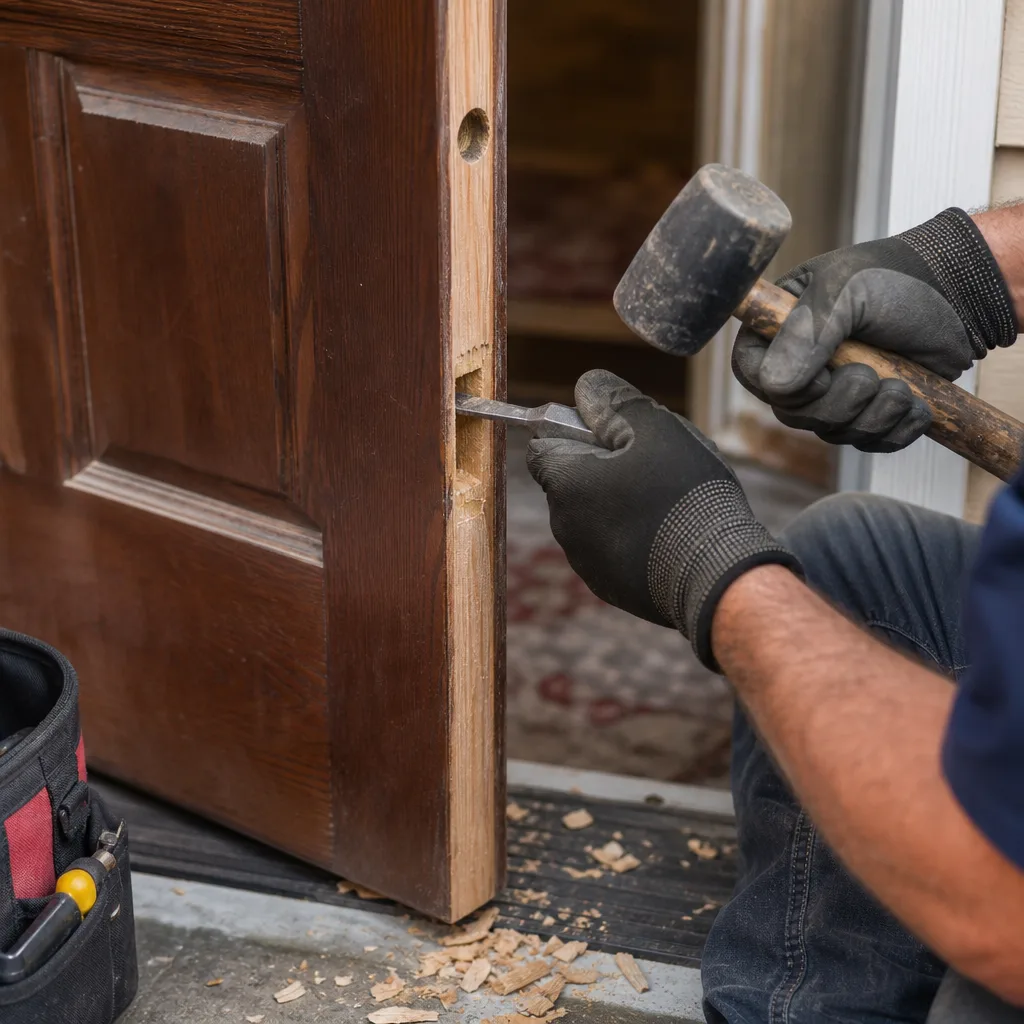
Electronic access control systems require mechanical maintenance that IT departments often overlook. The reader, strike, and door contact are physical devices subject to the same wear as purely mechanical hardware.
Our access control maintenance in Fort Worth includes these physical checks:
- Reader alignment and mounting security. Proximity and smart-card readers loosen over time from door vibration. We check torque on mounting screws and verify the reader face is parallel to the card presentation plane. Misalignment causes intermittent reads, which users resolve by repeatedly swiping, accelerating wear.
- Electric strike keeper condition. The keeper lip receives impact on every cycle. We measure lip thickness against manufacturer specification and replace when wear exceeds 20%. A worn keeper fails to secure the door even when electrically locked.
- Door contact gap. The gap between magnet and reed switch must be within manufacturer specification, typically 1/2 inch maximum. Frame shift from foundation movement increases this gap, causing false “door forced” alarms or failure to alarm on actual forced entry.
- Cable strain relief. Cables passing through the door edge experience flex on every cycle. We inspect for jacket abrasion and conductor fatigue. Failed cables cause intermittent faults that are diagnosed as software problems.
- Power supply voltage under load. We measure strike voltage at the device during actuation. Voltage drop under load indicates wiring degradation or power supply inadequacy. Low voltage causes slow strike release, which users interpret as system failure.
We coordinate physical maintenance with the customer’s IT provider or monitoring company, providing them with our findings in their preferred format. The documented photo record includes reader serial numbers, firmware versions where accessible, and test measurements.
Common Mistakes to Avoid
- Using residential-grade hardware in commercial applications. A Grade 3 deadbolt on a Fort Worth retail door will fail within two years. The replacement cost exceeds the original upgrade price, and the failure often occurs at the worst possible time.
- Lubricating electric strikes. Any lubricant on a solenoid or keeper mechanism attracts dust and causes binding. Use electrical contact cleaner only. We’ve replaced dozens of strikes in Fort Worth properties where well-meaning maintenance staff applied WD-40.
- Ignoring panic hardware bottom rods. Vertical rod exit devices fail at the bottom first, silently. The top works, the door opens, but the bottom latch doesn’t retract. During an emergency, the door may not open fully or may damage the frame. We check bottom rods on every inspection.
- Skipping documentation because “nothing was wrong.” The absence of findings is a finding. Insurance carriers and auditors want to see consistent inspection history, not just repair records. We document normal condition with the same rigor as defects.
- Matching hardware grade to tenant class, not traffic count. A “nice” office in the Cultural District with heavy client traffic needs Grade 1 hardware regardless of aesthetic preference. We spec Sargent or Yale Grade 1 leversets that meet both durability and appearance requirements.
- Delaying maintenance until failure. Emergency service costs 40-60% more than scheduled maintenance in our Fort Worth pricing. Predictable wear is cheaper than unpredictable failure. We offer maintenance agreements with priority scheduling and reduced rates.
- Assuming new construction hardware is correctly specified. General contractors frequently substitute specified hardware for available stock. We verify ANSI grades and fire ratings during initial occupancy inspections; the substitutions are often invisible until failure.
When to Call a Professional
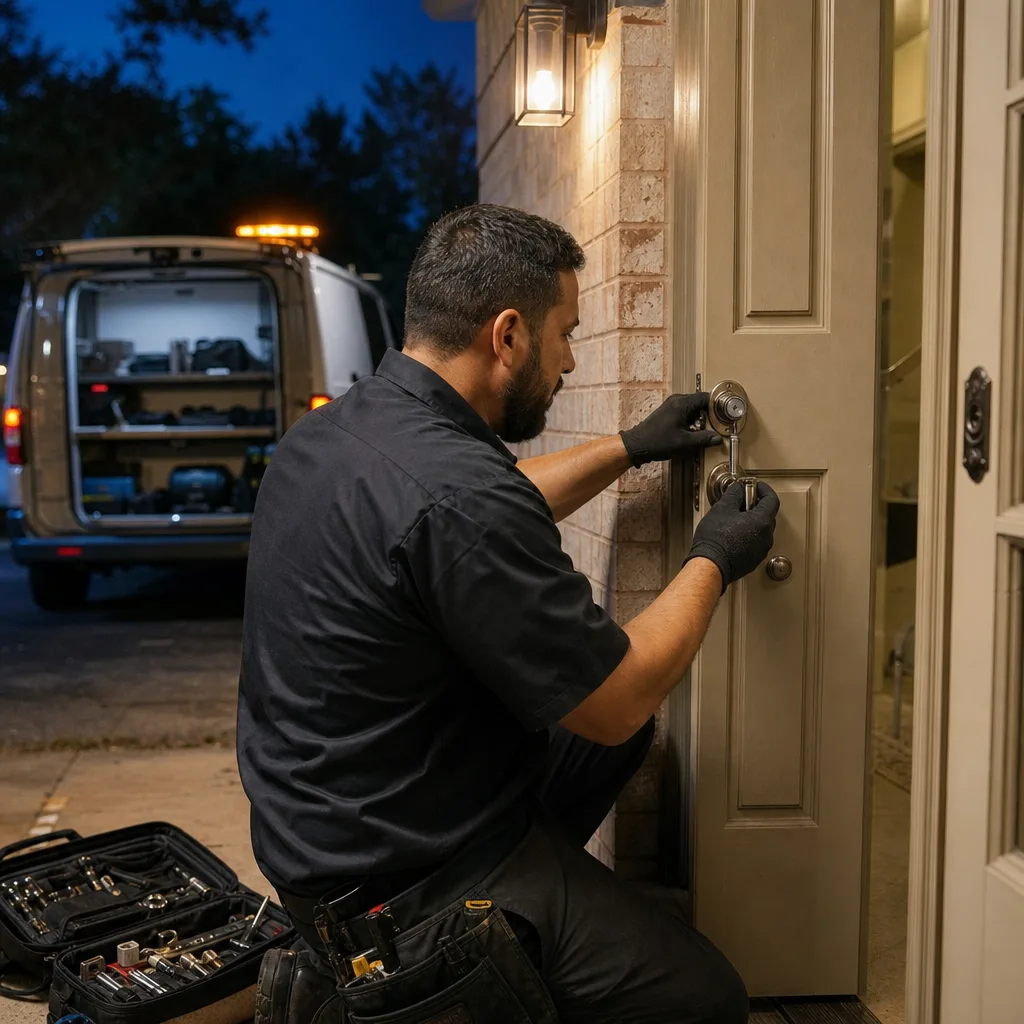
Some maintenance tasks require specialized tools or training. Before deciding to DIY, read our DIY vs Professional Locksmith: The Fort Worth Homeowner’s Decision Guide. Call a licensed locksmith when you encounter: seized cylinders that resist key insertion, panic hardware with delayed release or dogging failure, any door that requires shoulder force to open or close, electric strikes with voltage drop exceeding 10% under load, or master key systems with suspected cross-keying. Documented photo records and written scopes matter most when the situation is complex; verbal descriptions fail under scrutiny.
Novak Lock & Security Fort Worth offers free estimates for commercial maintenance programs and single inspections. We’ll review your existing hardware, count your door cycles, and provide a written scope with firm pricing before any work begins. Call (817) 765-4998.
Frequently Asked Questions
A scheduled maintenance inspection for a typical Fort Worth commercial property with 6-10 doors runs $180-$340, quoted in writing before we dispatch. This includes full inspection, documentation, lubrication with correct compounds, and a written report with photos. Emergency service outside scheduled maintenance is priced separately. Call (817) 765-4998 for an exact quote on your property - estimates are free.
Yes. Haven Standard Clause 1 states that the price quoted by the dispatcher is the price on the invoice, and our technicians are contractually prohibited from changing it at the door. This rule has been in place since 2002. If we discover additional requirements during the inspection, we stop, explain, and obtain written approval before proceeding.
Twice yearly for most properties: spring inspection after freeze-thaw cycles, fall inspection before heavy holiday traffic. Properties with high dust exposure (west Fort Worth, near construction) or extreme cycle counts (restaurants, retail) benefit from quarterly inspection. We adjust frequency based on actual condition trending, not a calendar alone.
Texas requires locksmith company registration through the Texas Department of Public Safety. Ask for the registration number and verify it. For commercial work, confirm they carry general liability and workers’ compensation insurance, and ask whether they provide written scopes, documented photo records, and warranty terms in writing. Novak Lock & Security Fort Worth provides all three on every visit, with background-checked, uniformed technicians.
No. Graphite absorbs moisture and forms an abrasive paste in Fort Worth’s humid climate. Use a Teflon-based dry lubricant or manufacturer-specified product instead. If your cylinders have been graphite-lubricated previously, have them flushed and re-lubricated correctly.
Fort Worth enforces the 2021 International Building Code with Texas amendments. Key requirements for locks: single-motion egress, maximum 15-pound release force, panic hardware on assembly occupancies over 50 persons, and fire-rated hardware on rated doors. A proper locksmith inspection verifies all four and documents compliance. We provide the documentation format that Fort Worth Fire Prevention Division inspectors accept.
The Bottom Line
For more guides & resources, commercial lock maintenance in Fort Worth is predictable work with predictable costs when it’s scheduled. The alternative is emergency service at premium rates, liability exposure from undocumented condition, and hardware failures that always occur at the worst moment. A proper checklist matches ANSI grade to actual traffic, verifies Texas fire code compliance, uses the correct lubricant for each hardware type, and produces documentation that protects you in an insurance claim or audit. Twice-yearly inspection, written scope, documented photo record, firm upfront pricing. That’s the standard we apply at every Fort Worth property we maintain.
Need a maintenance inspection or want to set up a scheduled program? Call Novak Lock & Security Fort Worth at (817) 765-4998. We’ll quote a firm price on the phone, dispatch a background-checked, uniformed technician, and leave you with a documented photo record and written report. Every job is backed by our 365-Day Done Right Promise and governed by The Haven Standard.
Written by Daniel Novak, Owner at Novak Lock & Security Fort Worth, serving Fort Worth since 2002.