
Last updated September 25, 2026
Non-destructive entry first, always - and we re-key Schlage, Kwikset, and Baldwin locks on the spot while you watch
You get a price before we start. It does not change when we arrive. No surprises.
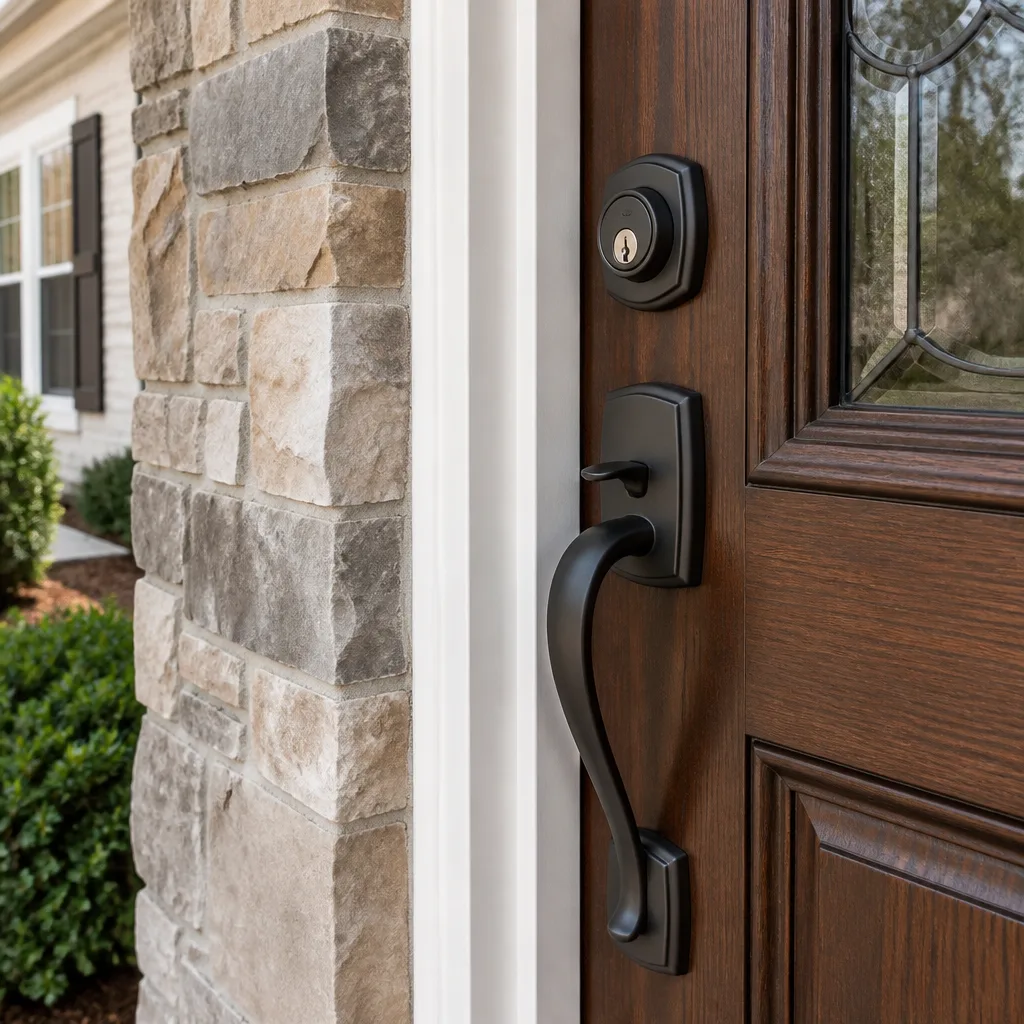
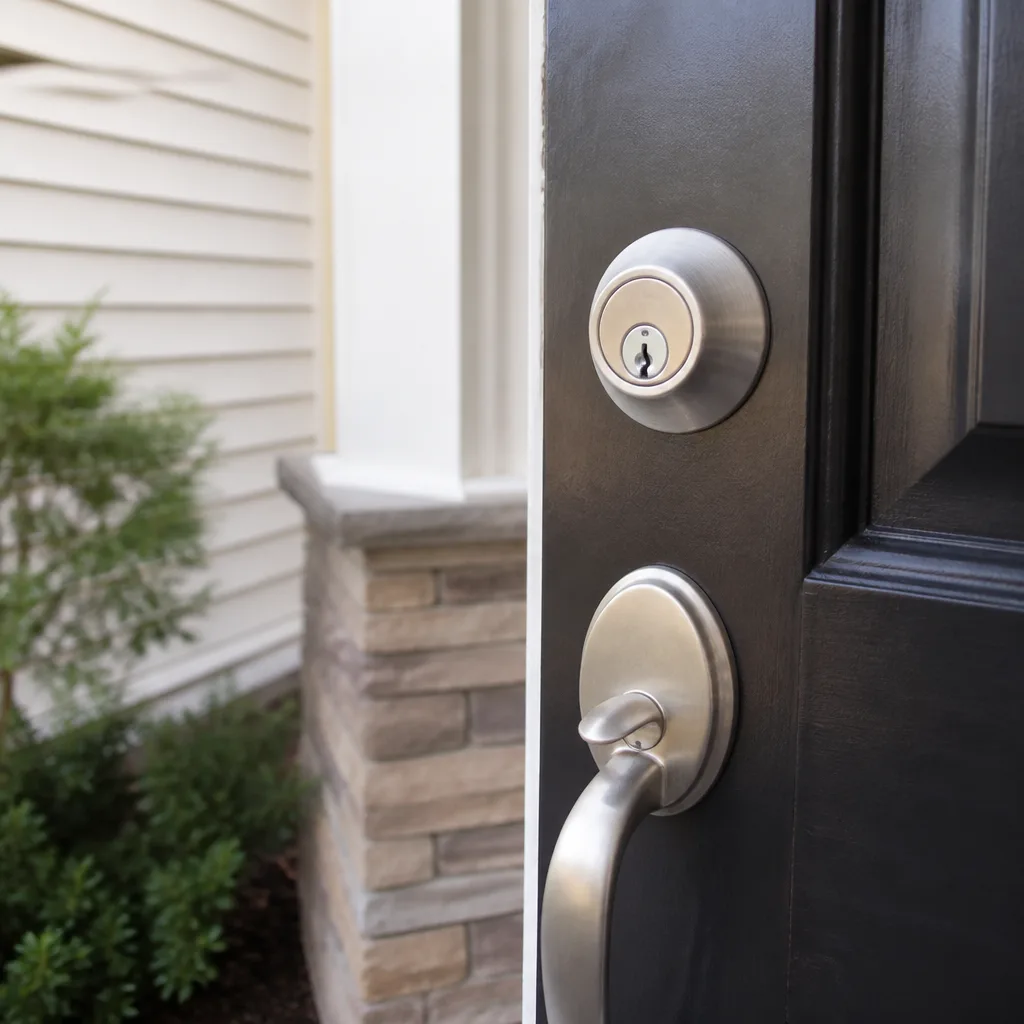
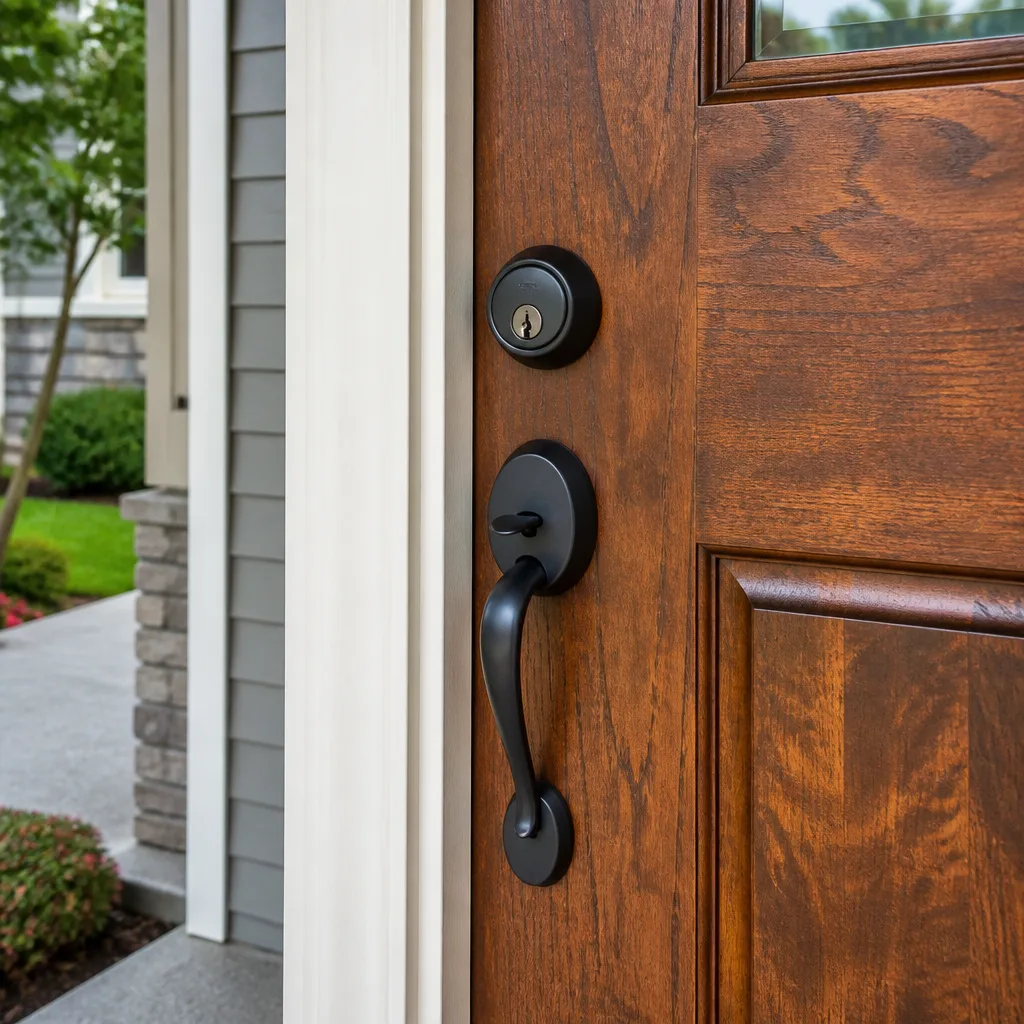
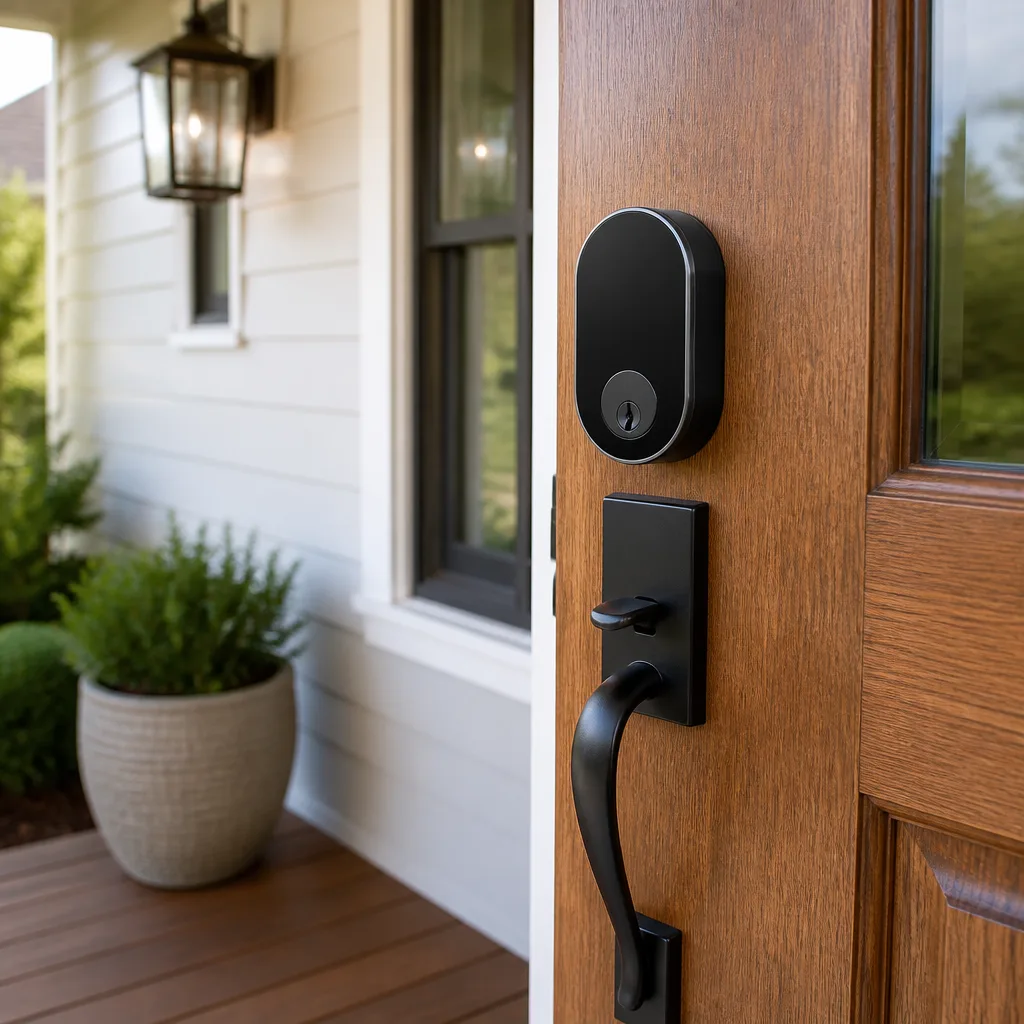
Locksmith Warning Signs: A Fort Worth Homeowner’s Reference Guide
The Federal Trade Commission has identified locksmith bait-and-switch operations as one of the most complaint-generating service frauds in the United States. The model is simple: advertise a low price, dispatch an unmarked technician, then inflate the bill at the door with fabricated “parts” charges, drilling fees, or emergency surcharges. Fort Worth’s rapid growth and high concentration of out-of-state franchise operations make it a reliable target market. This guide names six behavioral markers that separate legitimate locksmiths from fraudulent ones, explains the business-model logic behind each marker, and gives you exact words to use on the phone and at the door. For The Complete Guide to Locksmith in Fort Worth with more guides & resources, see our blog.
Quick Answer
A fraudulent locksmith in Fort Worth typically refuses to quote a firm price before arrival, arrives in an unmarked vehicle without Texas DPS registration, drills locks unnecessarily, invoices vague “parts” without brand names or ANSI grades, and pressures you to decide immediately. A legitimate operator quotes accurately by phone, carries documentation, and leaves a detailed invoice with every part specified.
Table of Contents
- Warning Sign 1: No Firm Price on the Phone
- Warning Sign 2: Unmarked Vehicle and No Pocket Card
- Warning Sign 3: Drilling a Lock as the First Action
- Warning Sign 4: Vague Invoice Without Brand Names or ANSI Grades
- Warning Sign 5: Pressure to Decide Immediately
- Word-for-Word Scripts for the Phone Call and Door Interaction
- Common Mistakes to Avoid
- When to Call a Professional
- Frequently Asked Questions
Warning Sign 1: No Firm Price on the Phone
Legitimate locksmiths can quote accurately before arrival because the variables are known. A residential lockout in Fort Worth’s Ridglea Hills neighborhood, a rekey of four Schlage deadbolts in Tanglewood, a replacement of a failed Kwikset SmartKey cylinder in Fairmount - these are routine jobs with established labor times and material costs. The dispatcher asks three or four questions, references a flat-rate schedule, and states the full price. That price includes labor, parts, trip charge, and tax. There is nothing to add.
Fraudulent operators use a different model. They quote a low “service call” price - sometimes $15 or $19 - that covers only the technician’s arrival. The actual work is priced separately, at the door, by a technician trained to identify stress and exploit it. The FTC has documented this pattern nationwide: the advertised price is a loss leader, the technician is a commissioned salesperson, and the average invoice is $300-$500 for work that should cost $100-$180.
At Novak Lock & Security Fort Worth, we operate under Haven Standard Clause 1: the price on the phone is the price on the invoice. This rule has been in place since 2002. The dispatcher quotes a firm price, enters it into the work order, and the technician is contractually prohibited from changing it. If the scope changes - if we arrive and find a high-security Medeco cylinder instead of the standard deadbolt described - we stop, call the office, and quote the new scope before proceeding. The original price remains valid for the original scope.
What to say on the phone: “I need a firm price for [specific job] including all labor, parts, and tax. If you cannot give me that price now, I will call someone else.” A legitimate dispatcher will answer immediately. A fraudulent operation will deflect to “our technician needs to see it first” or “prices vary depending on the lock.”
Red flags in phone quotes:
- Price quoted as “starting at” or “service call plus labor”
- Refusal to specify what the service call includes
- Claim that “every lock is different” for a standard residential deadbolt
- Dispatcher cannot or will not describe the technician’s vehicle or uniform
Warning Sign 2: Unmarked Vehicle and No Pocket Card
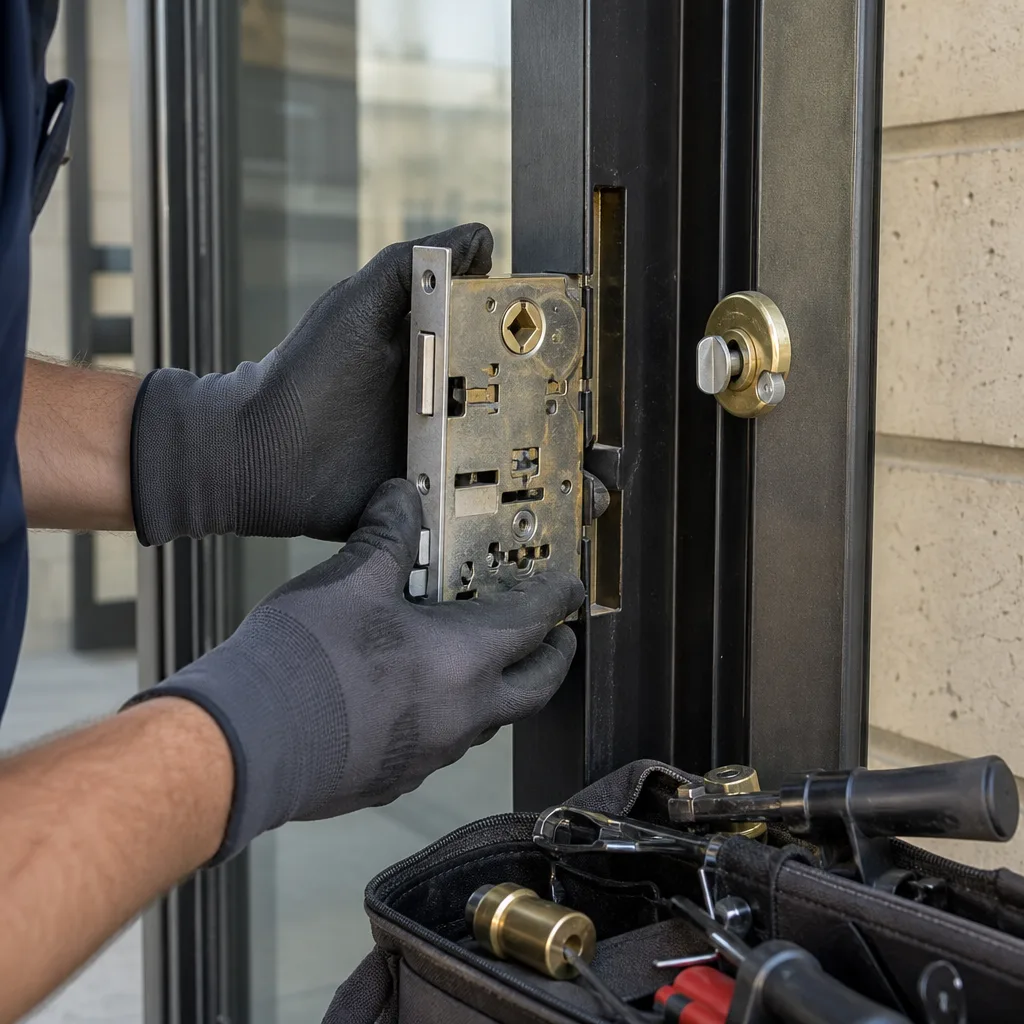
Texas Occupations Code Chapter 1702 requires every locksmith to hold a registration from the Texas Department of Public Safety. The registration card, commonly called a pocket card, must be carried at all times and presented on request. It contains the technician’s name, photo, registration number, and expiration date. A legitimate technician offers it before you ask. A fraudulent operator may claim to “have it in the truck” or produce an expired or photocopied card.
In Fort Worth, we see a specific pattern: technicians arrive in personal vehicles with magnetic door signs that can be removed in minutes. The vehicle has no permanent company markings, no Texas DOT number, no local business license displayed. This matters because a marked vehicle is traceable. A magnetic sign is not. The business that dispatched the technician may not exist as a legal entity in Texas at all - it may be a lead-generation website routing calls to unvetted subcontractors.
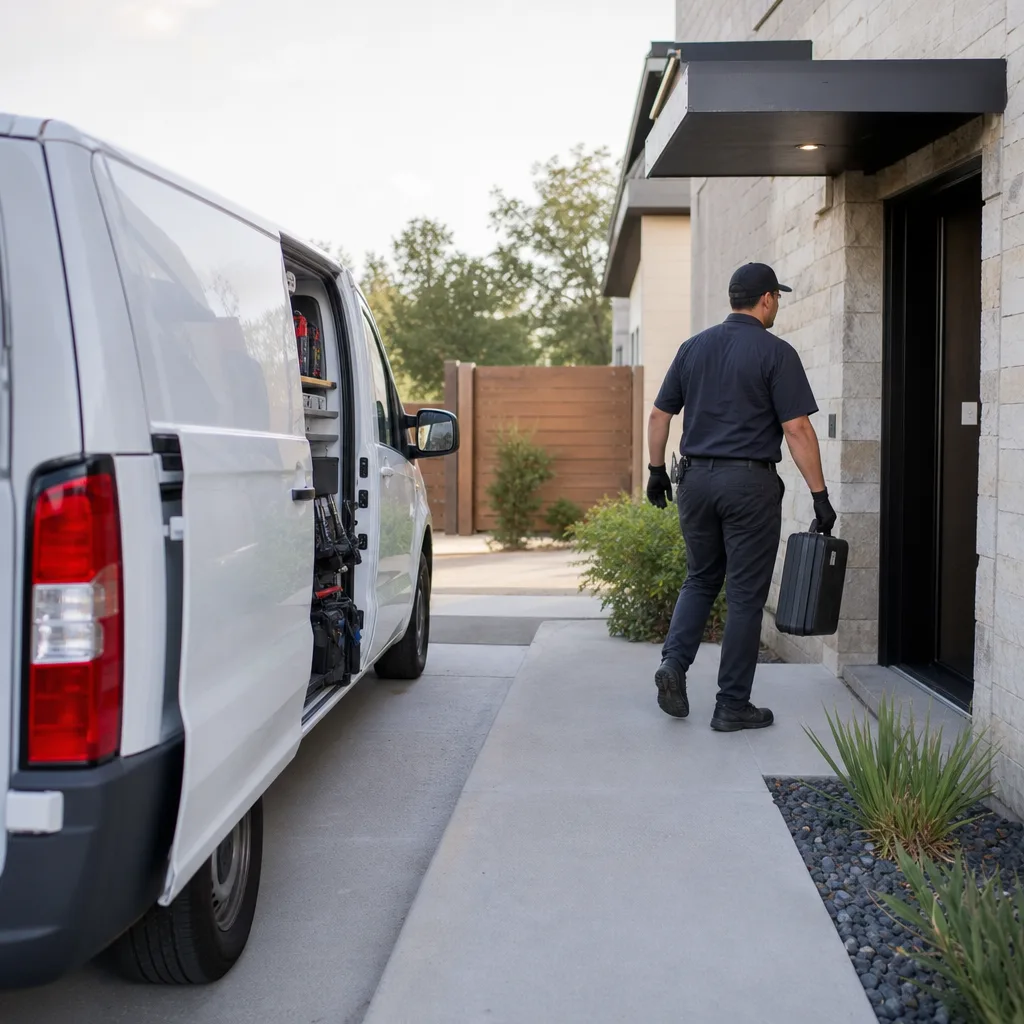
The vehicle itself tells a story. Our technicians arrive in Novak Lock & Security vans with permanent vinyl lettering, vehicle identification numbers, and GPS tracking. The van carries company-branded tools, inventory, and documentation. A technician who arrives in a sedan with a toolbox from another retail chain is not equipped for professional locksmith work and may not be a locksmith at all.
What to ask at the door before allowing any work: “Please show me your Texas DPS locksmith registration card.” Then verify the photo matches the person at your door. Ask for the company name on the card and confirm it matches the company you called. If the card lists a different name, or if the technician refuses to show it, close the door and call another Novak Lock & Security Fort Worth home or a verified local operator.
Fort Worth-specific note: The Fort Worth Police Department’s Consumer Fraud Unit has advised that unmarked vehicles responding to residential locksmith calls are a common precursor to inflated billing. The department recommends requesting registration before any work begins and documenting the vehicle description if the technician refuses.
Warning Sign 3: Drilling a Lock as the First Action
Drilling destroys the lock. It is sometimes necessary - when a high-security cylinder has failed internally, when a key has broken off flush with the face and cannot be extracted, when a lock has been vandalized with superglue or foreign objects. These are uncommon situations. For a standard residential lockout, drilling is almost never the first or second technique attempted.
A skilled locksmith in Fort Worth carries picks, bypass tools, key extractors, and decoding equipment for the common lock brands installed in local homes: Schlage, Kwikset, Baldwin, and the occasional Medeco or Mul-T-Lock in newer construction near Westover Hills or the Cultural District. A standard pin-tumbler deadbolt yields to picking in under ten minutes for a trained technician. A Kwikset SmartKey, common in homes built 2015-2020 throughout Fort Worth’s 76107, 76109, and 76116 ZIP codes, has a specific bypass technique that does not require drilling.
Drilling as the first action signals one of three things: the technician lacks training, the technician is incentivized to sell replacement hardware, or the technician intends to charge a “drilling fee” and an “emergency parts” markup on a lock you did not need to replace. We have documented cases in Fort Worth where technicians drilled standard Schlage deadbolts that were functional, then sold homeowners $400 “high-security” replacements that were entry-grade cylinders with decorative faceplates.
What to say before any drilling begins: “Stop. Explain why drilling is necessary for this specific lock, and show me the problem. If you drill this lock, I will not pay for replacement hardware I did not authorize.” A legitimate technician will explain the specific failure, show you evidence if possible, and obtain written authorization before destroying your property. At Novak Lock & Security Fort Worth, our technicians are required to photograph the lock condition before any destructive entry, document the reason for drilling, and obtain a signed authorization. This is Haven Standard documentation protocol, not an upgrade.
Warning Sign 4: Vague Invoice Without Brand Names or ANSI Grades
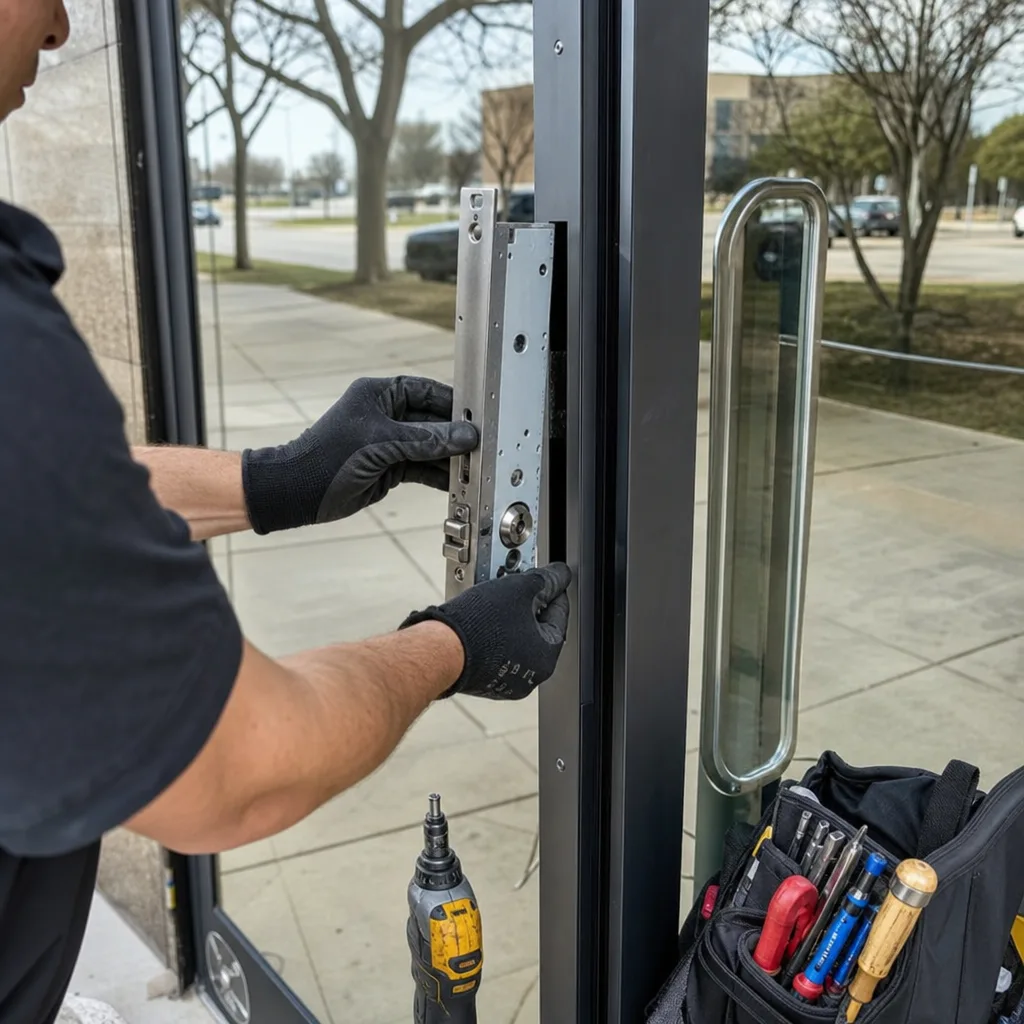
A legitimate locksmith invoice is a specification document. It names the manufacturer, the model number, the ANSI grade, the quantity, the unit price, and the labor line item with time and rate. It looks like this:
- Schlage B60N626 Deadbolt, ANSI Grade 1, 1 each @ $89.00
- Labor: Remove and replace single-cylinder deadbolt, 0.75 hr @ $85.00/hr
- Trip charge: Fort Worth service area, 1 @ $35.00
- Tax: 8.25%
A fraudulent invoice looks like this:
- Service call: $19
- Labor: $185
- Parts: $275
- Emergency fee: $95
The difference is not formatting. The difference is accountability. A specified invoice allows you to verify pricing, compare to retail hardware costs, and confirm you received the grade of lock you paid for. A vague invoice prevents all of this. The “parts” charge may represent a $12 Kwikset clone from a hardware store, marked up 2,000% and described as “premium security hardware.”
At Novak Lock & Security Fort Worth, every invoice generated under The Haven Standard includes manufacturer documentation, ANSI grade verification, and a photographed record of the installed hardware. The customer receives a copy before payment and a permanent record on request. Since 2002, we have generated over 60,000 written prices and documented records - every one retrievable by date, address, or customer name.
What to demand before payment: “I need an itemized invoice with manufacturer name, model number, ANSI grade, and separate labor and parts lines. If you cannot provide this, I will not pay.” In Texas, a consumer has the right to an itemized invoice for services rendered. A technician who refuses is violating both professional standards and consumer protection law.
Fort Worth-specific context: The Tarrant County District Attorney’s Office has prosecuted locksmith fraud cases where vague invoices were central evidence. Itemization protects both parties and is standard practice among legitimate operators in the Fort Worth market.
Warning Sign 5: Pressure to Decide Immediately
The pressure tactic works because it is applied at the moment of maximum vulnerability. You are locked out, late for work, or your child is inside. The technician has already arrived, has already begun work, or has already drilled your lock. Now the price is double or triple the phone quote, and you are told the “special rate” expires when the technician leaves, or that the truck must move to the next call, or that after-hours pricing kicks in within minutes.
This pressure exists because the fraudulent business model depends on it. The technician’s commission is a percentage of the inflated bill. The dispatcher’s bonus is tied to call volume, not customer satisfaction. The “company” has no local reputation to protect - it operates under multiple names, rotates phone numbers, and disappears from review sites when complaints accumulate. The pressure to decide immediately is the final extraction mechanism in a system designed to maximize revenue from a single interaction.
Legitimate locksmiths do not use time pressure because they do not need to. Our schedule in Fort Worth includes routine appointments, emergency calls, and planned installations. A customer who needs time to consider options can take it. The price quoted does not evaporate. Haven Standard Clause 1 applies regardless of when the customer decides.
What to say when pressured: “I do not make financial decisions under time pressure. I need this in writing, and I will call you back within 24 hours.” Then close the door. If the technician refuses to leave or becomes aggressive, call Fort Worth Police non-emergency at (817) 765-4998. Document the vehicle, the person’s description, and any phone numbers used.
Specific pressure phrases to recognize:
- “This price is only good while I’m here”
- “My dispatcher says I have to leave for the next call”
- “After 6 p.m. the rate doubles”
- “I already started the work, so you owe me for my time”
- “If you don’t decide now, I’ll have to charge a second trip”
None of these are standard practice among legitimate Fort Worth locksmiths. A written quote with a 30-day validity period is the professional norm.
Word-for-Word Scripts for the Phone Call and Door Interaction
Phone Script: Before You Schedule
Say exactly this: “I am locked out of my house at [address] in Fort Worth. I need a firm price to open this door without damaging the lock. The lock is a [brand if known] deadbolt, standard key, no damage. What is the total price including all labor, parts, tax, and trip charge?”
If the dispatcher cannot state a total price: “I am calling another locksmith. Thank you.”
If the dispatcher quotes a price: “Please confirm that price in writing by text or email before you dispatch anyone, and confirm that the technician cannot change it at the door.” Wait for written confirmation. Do not accept verbal promises.
Additional questions to ask:
- “What is the technician’s name and vehicle description?”
- “Will the technician have a current Texas DPS locksmith registration card?”
- “What is your company’s legal business name and Fort Worth address?”
- “If the technician cannot open the lock without drilling, what is the procedure?”
Legitimate answers: specific name, vehicle description, immediate confirmation of registration, a real Fort Worth address, and a clear protocol for scope changes that preserves the original price.
Door Script: When the Technician Arrives
Before allowing any work: “Please show me your Texas DPS registration card and confirm the price for [specific job] is $[amount] including all charges.”
If the technician cannot produce registration or the price differs from the written confirmation: “This visit is not authorized. Please leave my property.”
If the technician states drilling is necessary: “Stop. Show me the specific problem that requires drilling. I want to photograph the lock condition before any destructive work. If you drill without my written authorization, I will dispute any charges.”
If the technician presents an invoice with vague line items: “I need an itemized invoice with manufacturer, model number, ANSI grade, and separate labor and parts. Please provide this or contact your office.”
These scripts are not confrontational. They are professional boundaries. A legitimate technician expects them and responds with documentation. A fraudulent operator becomes evasive, aggressive, or leaves. Any of those responses is information.
Common Mistakes to Avoid
- Searching only for “locksmith near me” without verifying the business. Fort Worth’s search results for this query include lead-generation sites that sell your call to the highest bidder, not to a vetted local operator. Search for a specific company name, verify a Fort Worth address, and check for consistent reviews across multiple platforms.
- Accepting a verbal price as binding. Verbal quotes are unenforceable. The technician who quoted $75 on the phone can claim “misunderstanding” at the door. Written confirmation by text or email creates a record. At Novak Lock & Security Fort Worth, every quote is entered into our system and confirmed to the customer before dispatch.
- Allowing work to begin before verifying credentials. The right time to ask for registration is before the toolbox is open, not after the lock is drilled. A legitimate technician presents credentials without being asked. Make it a habit to ask anyway.
- Paying cash without a detailed receipt. Cash payments with generic receipts are common in fraud cases because they leave no paper trail. Insist on a detailed invoice with company name, address, phone, and itemized charges. Pay by check or card when possible.
- Assuming a local phone number means a local business. VoIP technology allows any operation to obtain a Fort Worth area code. Verify the physical address, check how long the business has operated at that location, and confirm the vehicle that arrives matches the company described.
- Ignoring the ANSI grade on replacement hardware. A “high-security lock” without an ANSI Grade 1 or 2 designation is marketing language, not a specification. Entry-grade locks (no ANSI grade or Grade 3) cost $15-$30 retail. They should not be sold as premium security hardware at premium prices.
- Not documenting the interaction. Photograph the technician, vehicle, and lock condition before and after work. Save all texts, emails, and invoices. This documentation is essential if you need to dispute charges or file a complaint with the Texas Department of Public Safety or the Fort Worth Police Department.
When to Call a Professional
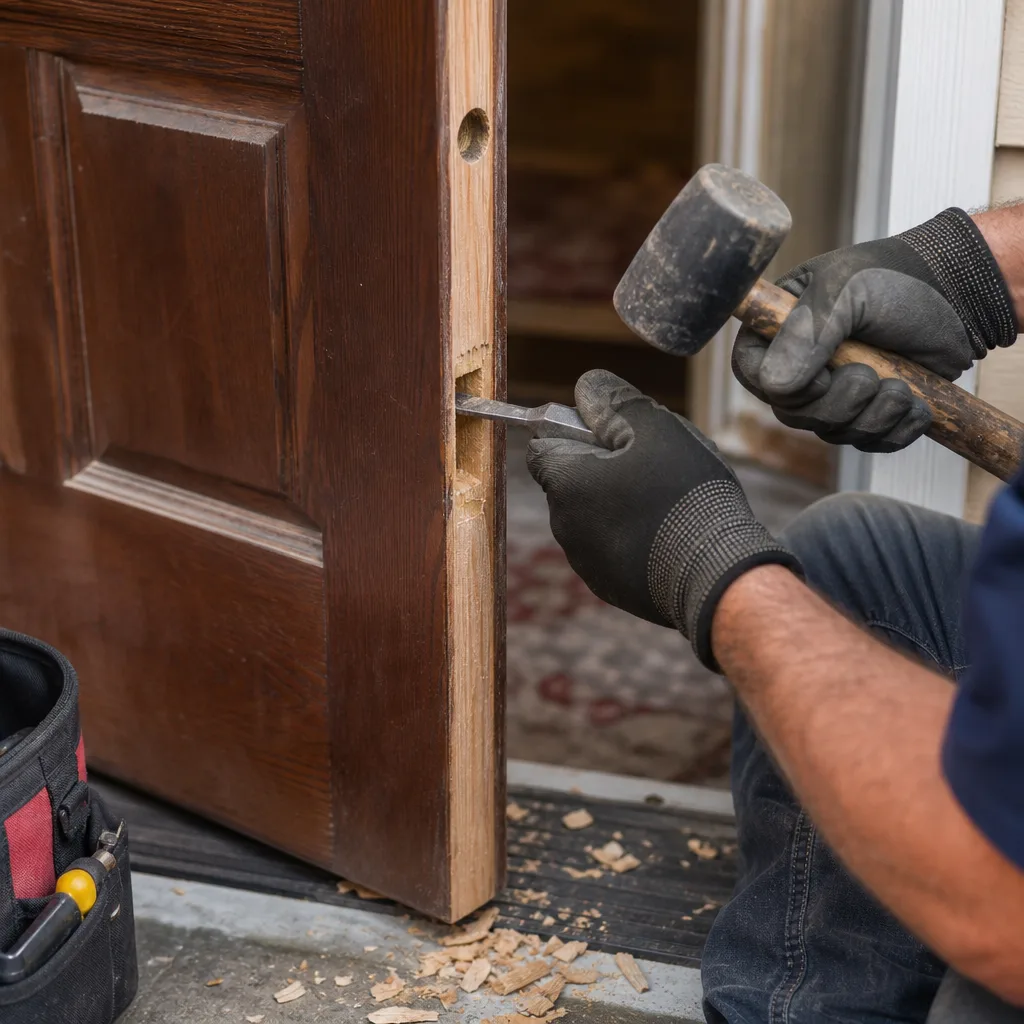
Call a professional locksmith when you are locked out, when keys are lost or stolen, when moving into a new home, when locks malfunction, or when you need a security assessment after a break-in or attempted break-in. In Fort Worth, where summer heat causes door frame expansion and winter cold contracts metal components, we see seasonal patterns of lock failure that homeowners often misdiagnose as key problems. See our Seasonal Locksmith Care for Fort Worth: Year-Round Homeowner’s Guide for prevention tips.
Novak Lock & Security Fort Worth offers free estimates for Residential Locksmith in Fort Worth services including rekeying, lock replacement, and security upgrades. We also provide Commercial Locksmith in Fort Worth services and Access Control Systems in Fort Worth for businesses requiring keyless entry or audit-trail capabilities. Every estimate includes a written scope and firm price before any work begins. Call (817) 765-4998.
Frequently Asked Questions
A standard residential lockout in Fort Worth typically runs $85-$150 including trip charge, labor, and tax. Rekeying a standard deadbolt costs $25-$45 per cylinder. Lock replacement with a Grade 1 deadbolt runs $150-$280 installed. These are 2024-2025 market ranges for established Fort Worth operators with proper licensing and insurance. Call (817) 765-4998 for an exact quote - estimates are free.
At Novak Lock & Security Fort Worth, yes. Haven Standard Clause 1 prohibits any price change between phone quote and invoice. The dispatcher quotes a firm price, enters it into the work order, and the technician cannot alter it. If the scope changes, we stop and quote the new scope before proceeding. The original price remains valid for the original scope. For more guides & resources, visit our blog.
Texas requires locksmiths to hold a DPS registration card with photo, registration number, and expiration date. Ask to see it before any work begins. Verify the registration status at the Texas Department of Public Safety website. Legitimate technicians carry this card and present it without objection.
Yes, in nearly all standard residential cases. A trained locksmith opens pin-tumbler deadbolts with picks or bypass tools. Drilling is reserved for failed high-security cylinders, broken key extractions that cannot be retrieved, or vandalized locks. If a technician proposes drilling first, ask for a specific explanation and consider a second opinion.
Document everything: invoice, technician description, vehicle information, and payment method. Contact the company in writing requesting itemization. If unresolved, file complaints with the Texas Attorney General’s Consumer Protection Division, the Fort Worth Police Department’s Consumer Fraud Unit, and your payment provider. For disputed card charges, request a chargeback with your documentation.
Emergency response times in Fort Worth typically range from 20-45 minutes depending on traffic, weather, and time of day. Operators based in central Fort Worth or near major corridors like I-30, I-35W, or Loop 820 can reach most neighborhoods within this window. Be cautious of promises under 15 minutes - they often indicate a dispatcher guessing rather than scheduling, or a technician already in your area without a confirmed appointment.
The Bottom Line
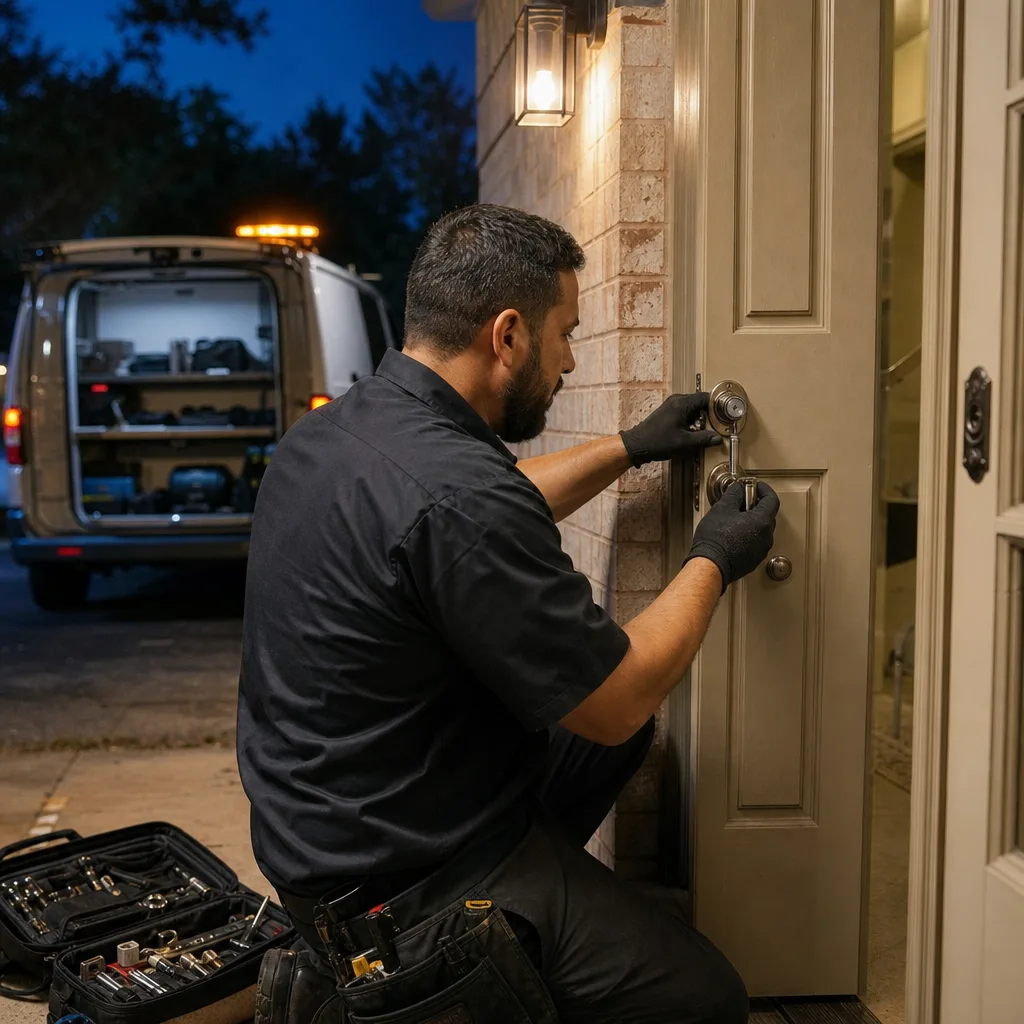
Locksmith fraud in Fort Worth is recognizable before any money changes hands. The markers are behavioral, not technical: refusal to quote firm prices, unmarked vehicles, missing credentials, destructive first actions, vague invoices, and time pressure. Each marker serves a specific function in a business model built on extraction rather than service. The scripts in this guide give you exact words to interrupt that model without confrontation. A legitimate locksmith welcomes verification, documents everything, and quotes in writing. That standard has defined our work at Novak Lock & Security Fort Worth since 2002.
Written by Daniel Novak, Owner at Novak Lock & Security Fort Worth, serving Fort Worth since 2002.